'%20stroke='none'%3e%3cpath%20d='M%20761%2039%20L%20760%2062%20L%20912%20216%20L%201003%20329%20L%201071%20463%20L%201112%20603%20L%201132%20608%20L%201149%20582%20L%201165%20516%20L%201163%20403%20L%201145%20330%20L%201088%20216%20L%201017%20132%20L%20918%2062%20L%20821%2034%20Z'/%3e%3cpath%20d='M%201429%20756%20L%201409%20755%20L%201383%20772%20L%201233%20919%20L%201123%201002%20L%201003%201064%20L%20862%201111%20L%20852%201131%20L%20925%201156%20L%201044%201155%20L%201142%201131%20L%201246%201080%20L%201313%201029%20L%201395%20932%20L%201432%20834%20Z'/%3e%3cpath%20d='M%20219%20262%20L%20223%20282%20L%20251%20290%20L%20481%20262%20L%20625%20265%20L%20737%20289%20L%20852%20332%20L%20878%20326%20L%20869%20291%20L%20841%20255%20L%20757%20187%20L%20658%20144%20L%20550%20125%20L%20440%20130%20L%20361%20154%20L%20254%20218%20Z'/%3e%3cpath%20d='M%201283%20295%20L%201246%20293%20L%201230%20312%20L%201226%20499%20L%201208%20632%20L%201174%20743%20L%201091%20894%20L%201087%20930%20L%201148%20912%20L%201237%20836%20L%201292%20760%20L%201335%20660%20L%201355%20554%20L%201351%20440%20L%201329%20358%20L%201311%20322%20Z'/%3e%3cpath%20d='M%20518%201092%20L%20526%201128%20L%20551%201167%20L%20633%201247%20L%20724%201300%20L%20821%201333%20L%20906%201345%20L%201023%201337%20L%201100%201306%20L%201152%201259%20L%201147%201240%20L%201118%201230%20L%20913%201217%20L%20782%201194%20L%20655%201151%20L%20545%201092%20Z'/%3e%3cpath%20d='M%20534%20340%20L%20477%20325%20L%20368%20337%20L%20284%20370%20L%20191%20433%20L%20123%20504%20L%2073%20591%20L%2051%20667%20L%2057%20762%20L%2076%20764%20L%20115%20731%20L%20221%20592%20L%20305%20504%20L%20416%20422%20L%20537%20354%20Z'/%3e%3cpath%20d='M%20279%20649%20L%20220%20704%20L%20178%20781%20L%20149%20884%20L%20144%201001%20L%20158%201085%20L%20189%201158%20L%20246%201235%20L%20304%201279%20L%20317%201269%20L%20319%201234%20L%20271%20953%20L%20272%20823%20L%20297%20675%20L%20294%20651%20Z'/%3e%3cpath%20d='M%20340%20984%20L%20329%201040%20L%20349%201141%20L%20392%201232%20L%20447%201305%20L%20519%201372%20L%20613%201424%20L%20715%201441%20L%20759%201431%20L%20757%201407%20L%20727%201375%20L%20578%201256%20L%20502%201183%20L%20441%201111%20L%20362%20993%20Z'/%3e%3c/g%3e%3c/svg%3e)
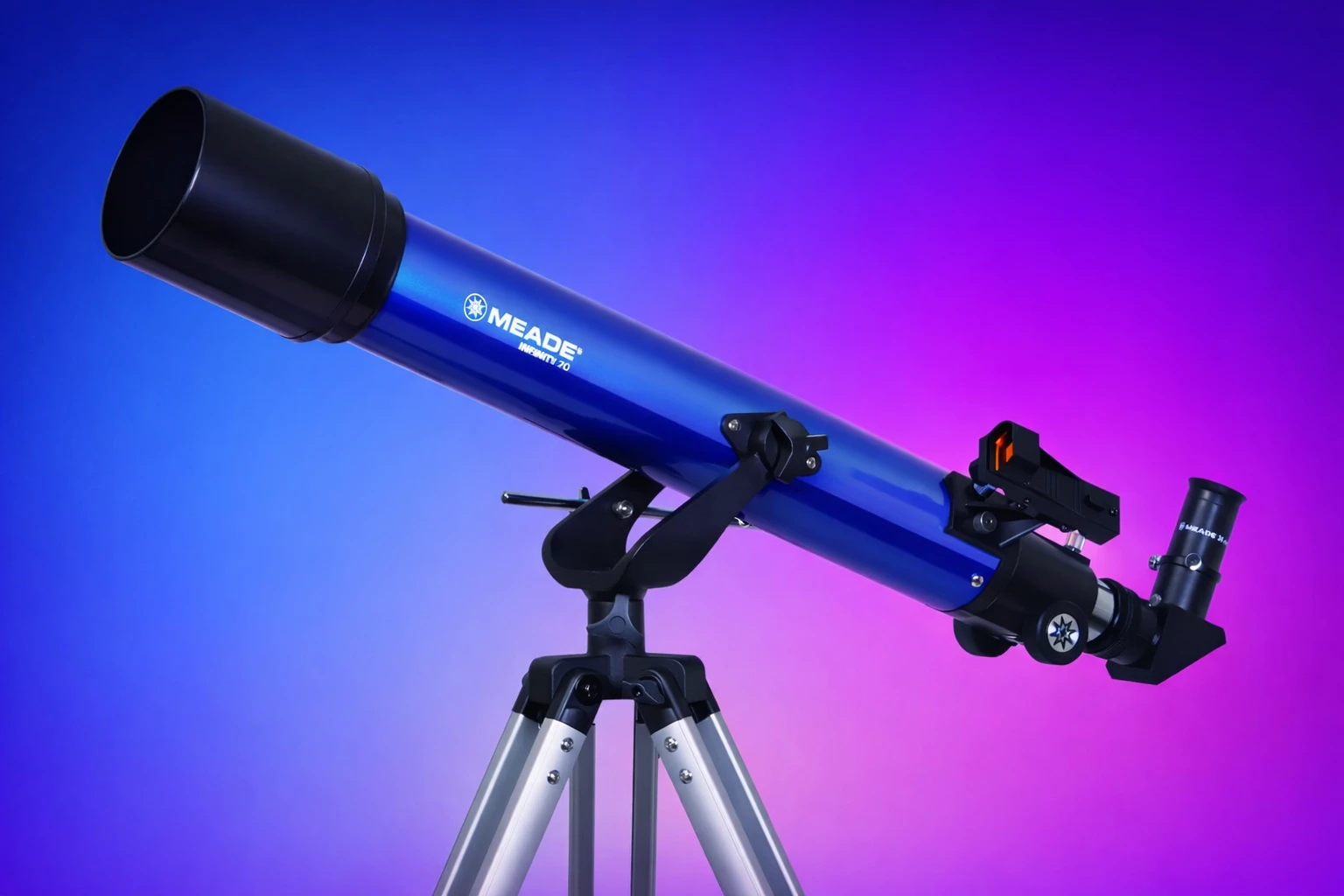
The Meade Infinity 70 is often marketed as an ideal beginner telescope, but in practice it sits very close to the lower boundary of what is truly useful for astronomy. While it does function as a real optical instrument, expectations need to be kept in check. Its appeal comes almost entirely from its low price rather than from outstanding performance or build quality.
With a 70 mm aperture, it can show the Moon clearly and reveal Jupiter as a small disk with its four Galilean moons nearby. Saturn’s rings are detectable as a thin oval, and Mars may appear as a tiny orange dot during favorable oppositions. These views confirm that the telescope “works,” but they remain modest and lack fine detail. Deep-sky observing is very limited: bright objects like the Orion Nebula or Andromeda Galaxy are faint smudges at best, and urban light pollution quickly overwhelms what the telescope can gather.
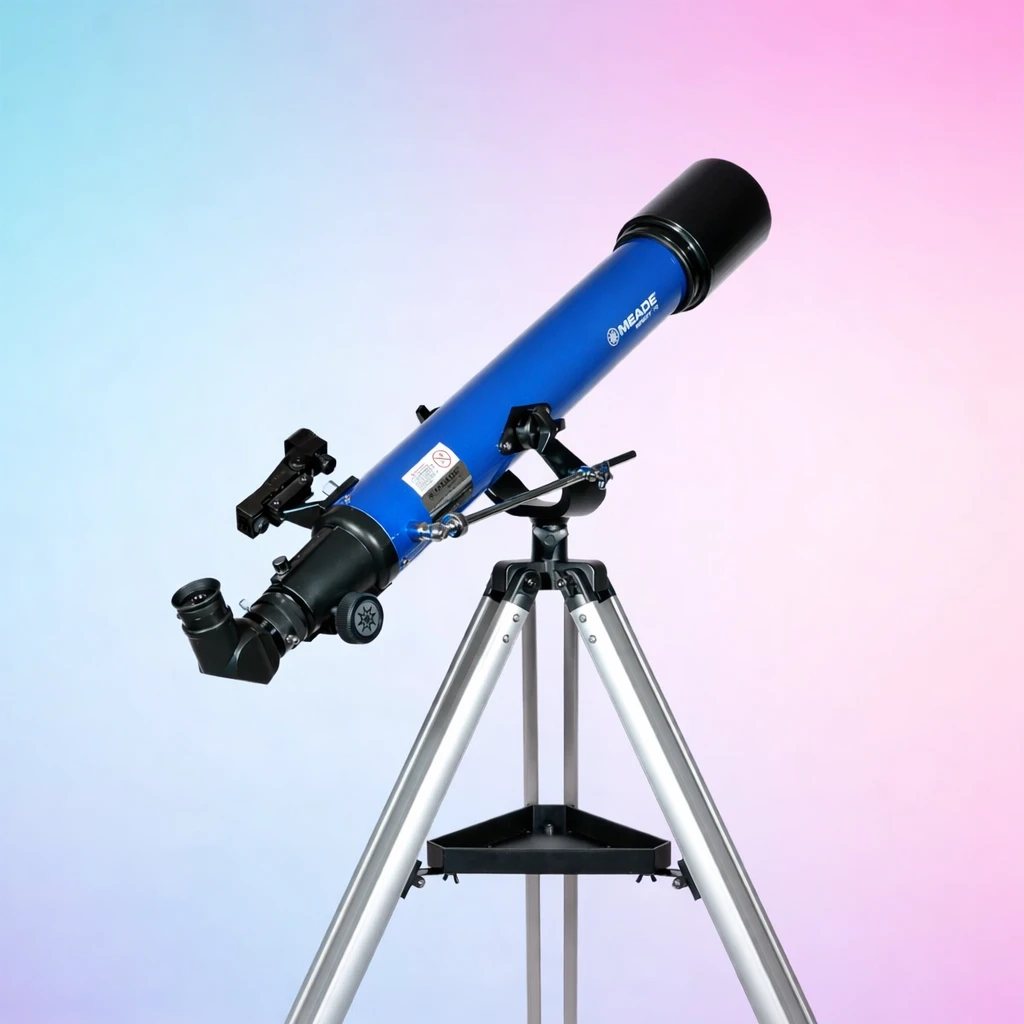
The included Kellner eyepieces are serviceable but basic. The 26 mm provides low-power wide views, while the 9 mm pushes the scope toward its practical limits. The plastic Barlow lens technically increases magnification, but often at the cost of sharpness and contrast. Many users eventually replace these accessories, which raises the real cost of the setup.
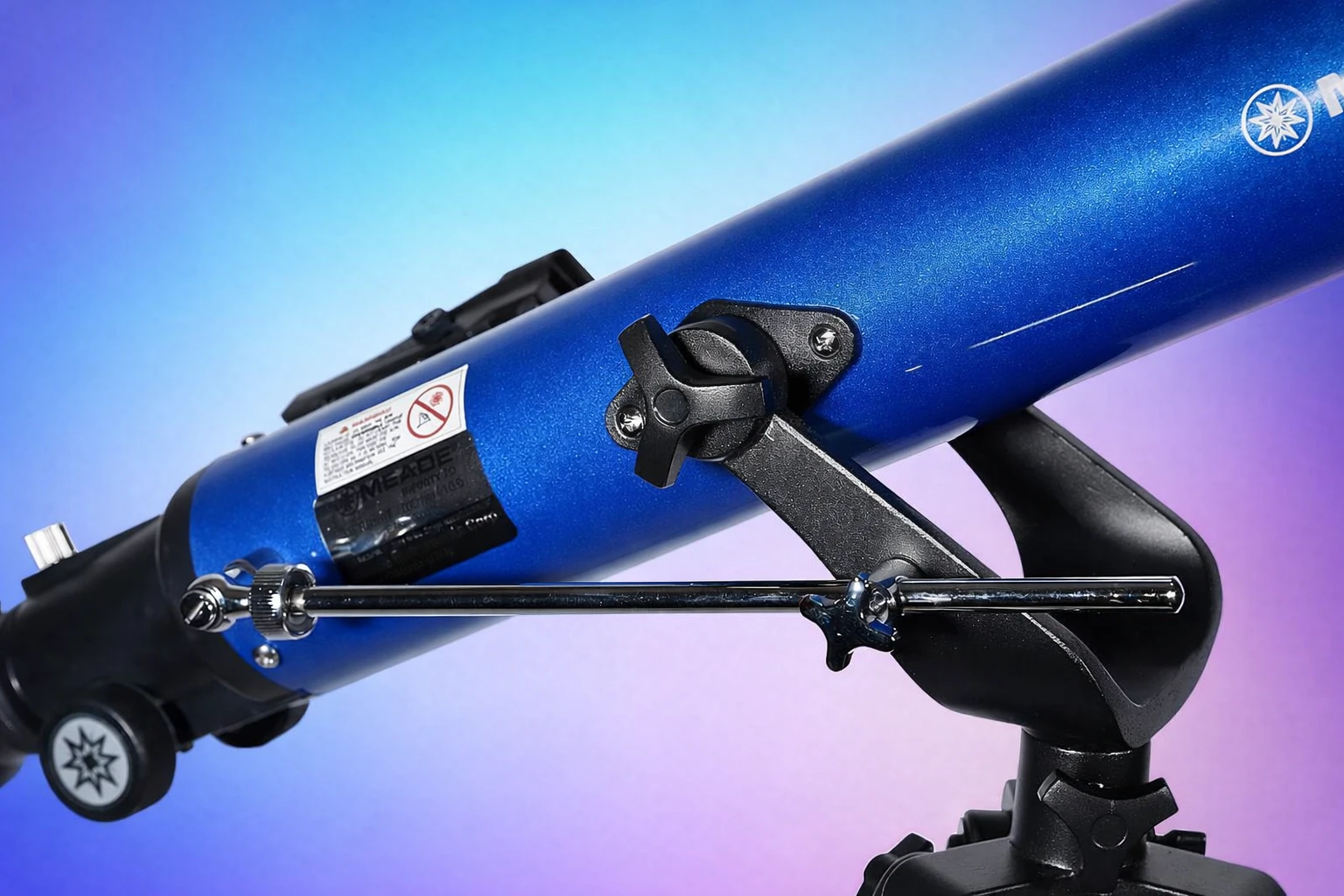
The rack-and-pinion focuser is usable, though it feels light and imprecise compared to better-built instruments. The tripod does its job at low magnifications, but becomes noticeably shaky once you zoom in. This makes high-power observing frustrating, especially for beginners who are still learning to track objects in the sky.
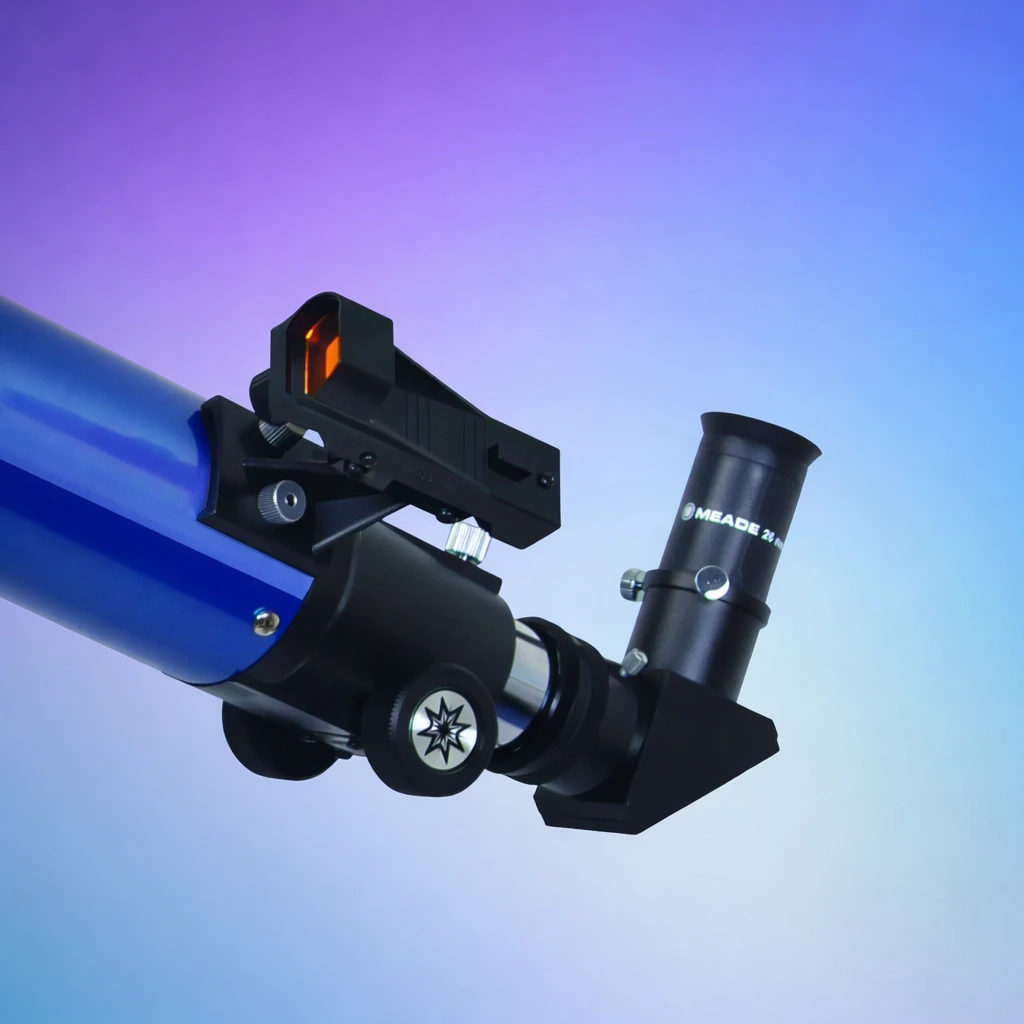
The red dot finder is simple and easy to understand, but it offers little precision. It works for the Moon and bright planets, yet becomes less helpful when trying to locate dimmer targets.
In reality, the Meade Infinity 70 represents the minimum level at which a telescope can still be considered functional for astronomy. It can introduce the night sky, but it does not leave much room for growth or deeper exploration. Spending a bit more on a sturdier 80 mm refractor or a small reflector often results in a noticeably better and more satisfying experience.
Pros
- 70 mm aperture: clear lunar and planetary views
- Includes decent eyepieces and a Barlow lens
- Easy-to-use red dot finder
Cons
- Limited deep-sky performance
- Tripod can wobble at high power
- Barlow lens is plastic
Available at These Vendors
In-Depth Review and Technical Specifications
Refractors in the 70–80 mm range mark the point where a telescope starts to become genuinely usable for basic astronomy. Below this, many instruments struggle to outperform decent binoculars. The Infinity 70 technically clears that bar, but only just. It can show real astronomical detail, yet it remains firmly in the “entry-level” category, with clear limits that become apparent as soon as you try to push it.
Optics and Eyepieces
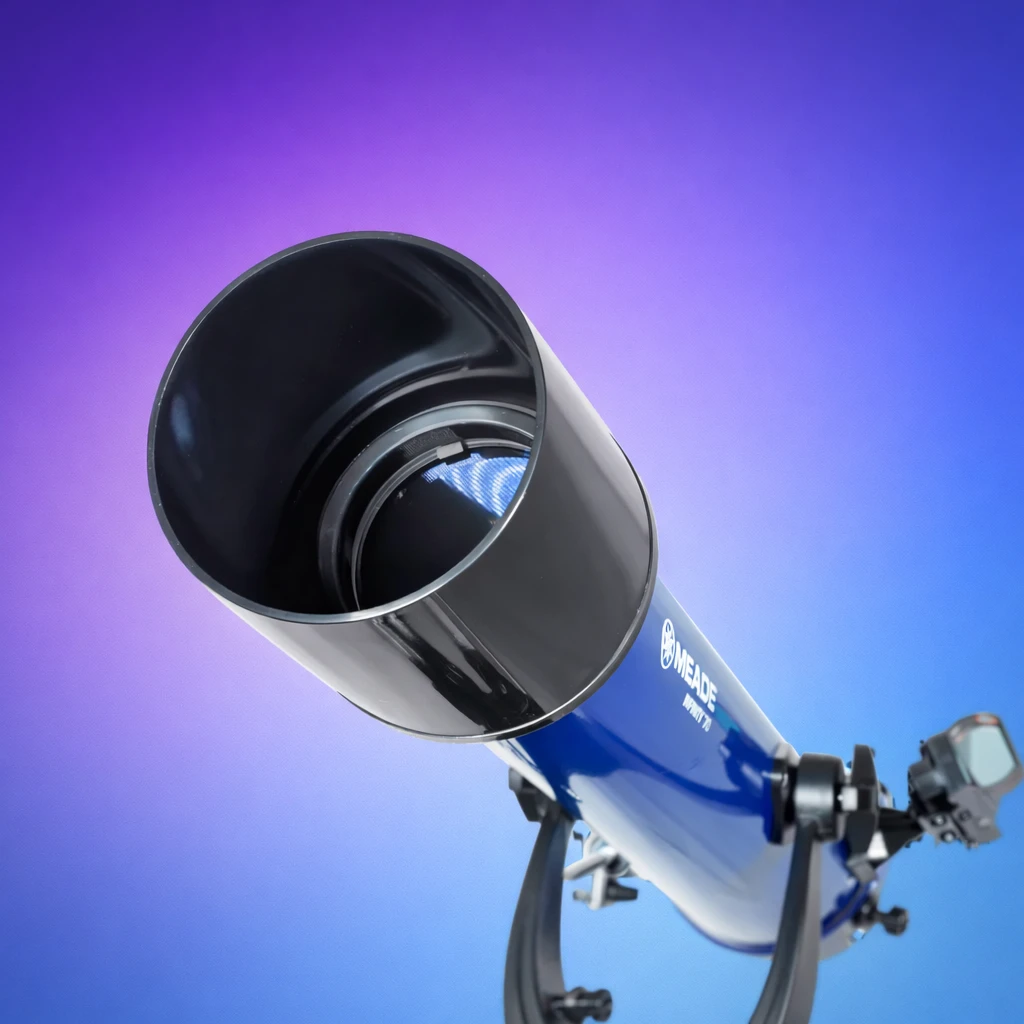
With its 70 mm aperture, the Infinity 70 can reveal Jupiter’s moons, Saturn’s rings as a thin oval, and the Moon in crisp detail. Mars may show hints of its polar caps during favorable oppositions, though it remains very small. Claims that features like Apollo landing sites are visible are misleading—no amateur telescope can resolve them. What you actually see are the surrounding craters and lunar plains.
Deep-sky performance is modest. Bright objects such as the Orion Nebula or Andromeda Galaxy are detectable, but appear faint and low in contrast, especially under light-polluted skies. Open star clusters fare better and are among the more satisfying targets for this scope.
The included eyepieces are basic three-element designs derived from classic Kellners. The 26 mm (27×) works well enough for wide-field views, while the 9 mm (78×) pushes the telescope closer to its practical limits. Image sharpness drops noticeably at higher power, which is why many owners eventually replace these eyepieces if they continue with the hobby.
Tripod and Mount
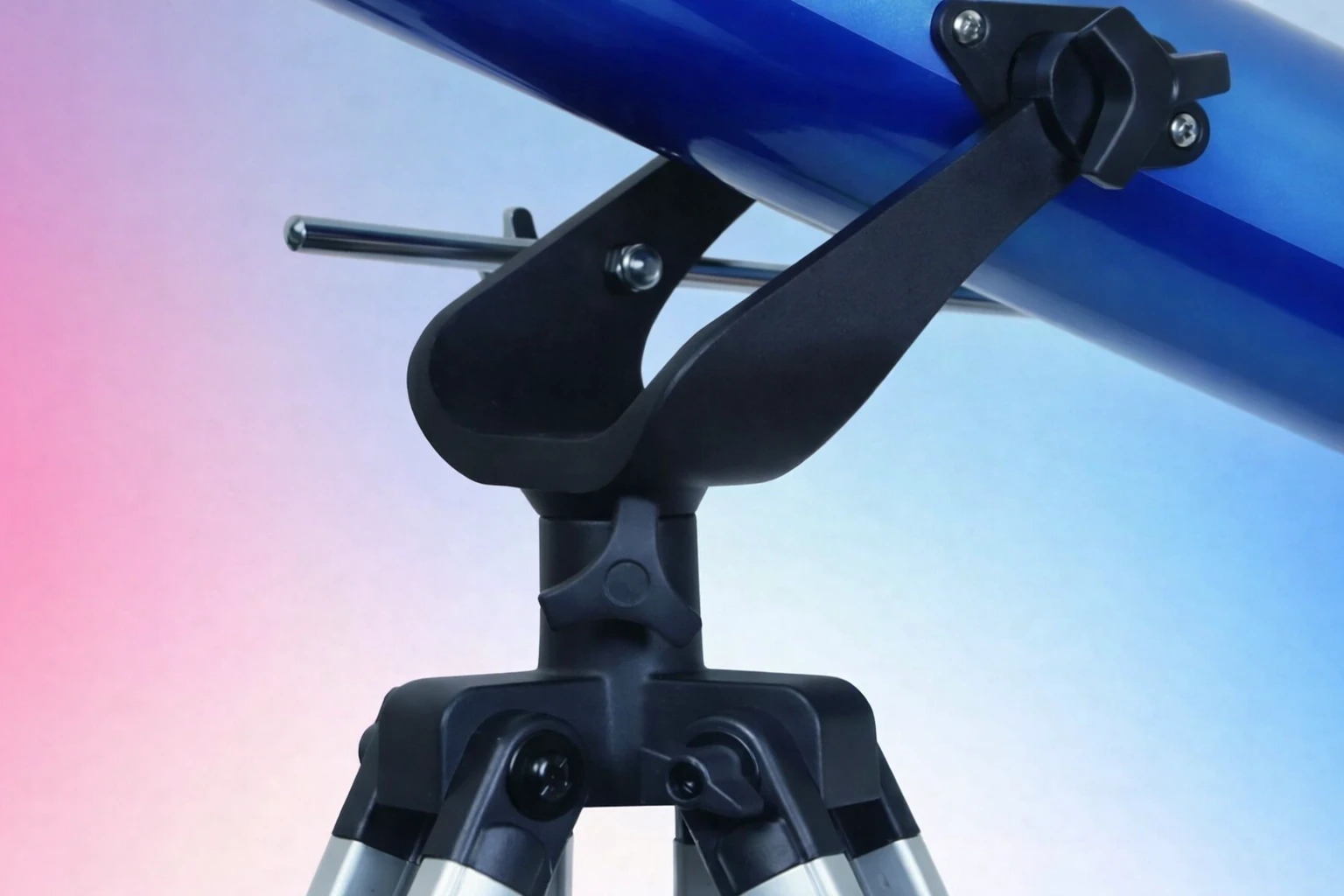
The aluminum tripod and simple alt-azimuth mount are functional but lightweight. At low magnifications they are manageable, but vibrations become obvious once you zoom in. Horizontal movement is usually smooth, while vertical motion can feel uneven, with the tube sometimes drifting toward balance when pointed high or low. This makes precise planetary observing more difficult than it needs to be.
The long, light optical tube keeps the system from becoming unusable, but stability remains a limiting factor. Anyone planning to spend time at higher magnifications will quickly notice that the mount, rather than the optics, becomes the main bottleneck.
Accessories
The accessory set is typical for this price range rather than exceptional. You get two serviceable eyepieces, a red dot finder, a diagonal, and a plastic Barlow lens. The rack-and-pinion focuser is mostly plastic and feels light, though it works with standard 1.25″ eyepieces.
The Barlow technically doubles magnification, but often at the expense of image quality. In practice, higher power with this setup tends to look soft and low in contrast. Most observers eventually prefer a better single eyepiece over relying on the Barlow.
The 90° diagonal improves viewing comfort and generally does not introduce major distortion, but it is still a budget component and not a highlight of the system.
Drawbacks
The mount and tripod are the weakest parts of the package. They work, but they make high-power observing less enjoyable due to vibration and imprecise movement. This is expected at this price, but it significantly shapes the overall experience.
Conclusion
The Meade Infinity 70 is best understood as a minimal gateway into telescope astronomy. It can show real celestial objects and provide a first taste of the night sky, but it does not offer much headroom for growth. Many beginners who stay in the hobby soon find themselves wanting a sturdier mount and more light-gathering power. Spending a little more upfront often leads to a noticeably more satisfying and longer-lasting setup.
Disclaimer: This review is based on technical specifications, manufacturer details, and multiple reports from telescope owners on forums such as Cloudy Nights, Amazon reviews, and other trusted sources. I have not personally used this telescope, but this article combines verified user feedback and product analysis to give an accurate overview.