
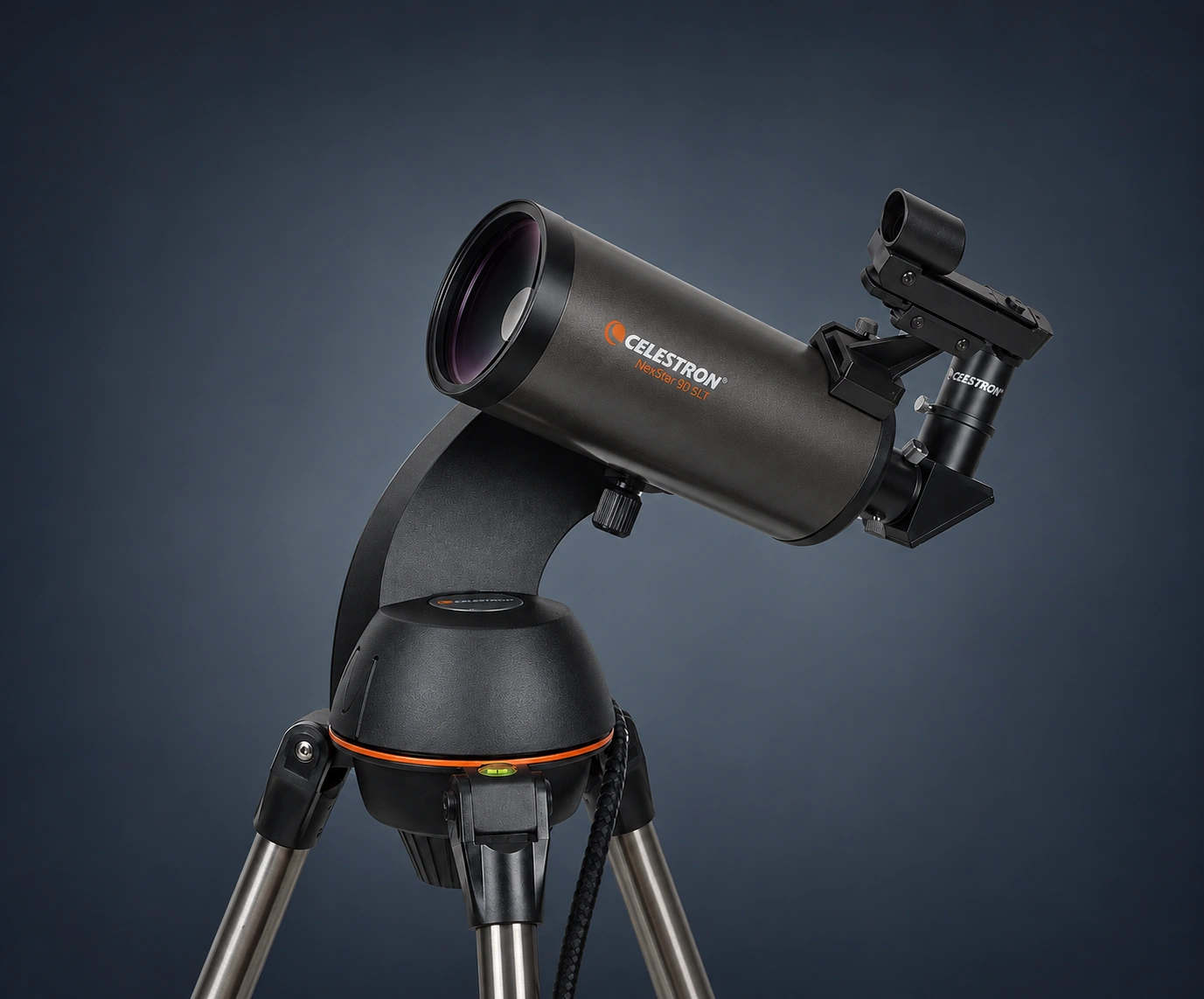
Based on owner reports and hands-on reviews, Celestron NexStar 90 SLT is a great planetary performer, but it doesn’t come with a built-in battery.
Pros
- Planetary Performance
- Well-Built Optical Tube
- Auto-Tracking
- GoTo Capabilities
Cons
- Deep Space Performance
- No Built-in Battery
- Cheap Accessories
Available at These Vendors
Review
Although there are problems with it, Celestron NexStar 90 SLT is among the better choices for starter computerized telescopes for a few reasons.
It is a planetary performer, so Auto-Tracking and GoTo abilities feel more useful.
Celestron’s steel tripod and mount motors are slightly better built and sturdier.
The price tag is reasonably low.
NexStar 90 is a planetary performer.
But there are significant flaws with the design. We will talk about these in detail in the corresponding sections, but in short, there is no built-in battery, and the computerized mount is prone to problems.
We suggest going for a manual telescope at this price range. With computerized budget models, you are paying for the computer more than the telescope. But, if GoTo and Auto-Tracking features are necessary, Celestron NexStar 90 SLT is a good choice.
Optics
The optics have a 90mm aperture with Maksutov-Cassegrain design. They are specifically built for high-magnification performance.
The most important advantage of this optical design is the lack of diffraction spikes and chromatic aberration. These are optical problems that are annoying with refractors and reflectors.
Planetary Performance
Owners report NexStar 90 SLT easily gathers details from Jupiter. You can observe its stripes, Galilean Moon’s and The Great Red Spot.
Planetary images are described as color accurate and sharp.
Saturn shows its Rings with the Cassini Division in between, and a couple of its moons are observable as well.
Mars and Venus appear as colorful disks. You can observe some detail on the surface of Mars, and the phases of Venus are relatively clear.
Owners describe the Lunar Surface as mesmerizing, with countless craters and mountain ranges. If you are going for Lunar observations specifically, NexStar 90 SLT is an excellent choice. Owners also report lunar photography with this thing is easy.
Deep Space Performance
Don’t expect much in this category. The aperture is 90mm, and the focal ratio is f/14. The images are so narrow it is hard to fit in the Andromeda Galaxy inside the field view.
Star clusters are better targets since they are relatively brighter and more narrow, but nebulas and galaxies are usually difficult targets for Celestron NexStar 90 SLT.
If deep space performance is essential to you, we suggest going for all-rounder optical designs. These include Tabletops, Dobsonians, and mid-level length refractors.
Owners find deep space performance disappointingly narrow and dim.
Is Astrophotography possible with Celestron NexStar 90 SLT?
Serious astrophotography is not possible with this telescope. This is due to the nature of the mount. Although Auto-Tracking will track the object for 10-15 minutes, the motions are not smooth. It constantly moves up-down, up-down. So owners report the image starts to get blurry after 30-40 seconds.
In short, 30-40 second exposure photography is possible. That limits you to relatively sharper planetary imaging. Lunar imaging, as we’ve mentioned before, is reported to be phenomenal with NexStar 90 SLT. You don’t need long exposure times with the Moon, and the are visibly no image errors.
Mount
The NexStar 90 SLT’s mount has its advantages and disadvantages. Computerized mounts are a controversial topic.
Some love the features that come with a GoTo mount and the ability to track any space object with a single command. This motorized mount is also more stable due to the motorized insides. The connections are stronger. Owners say it definitely feels stronger than manual mounts.
But there are a couple of problems with the mount.
The Battery Problem
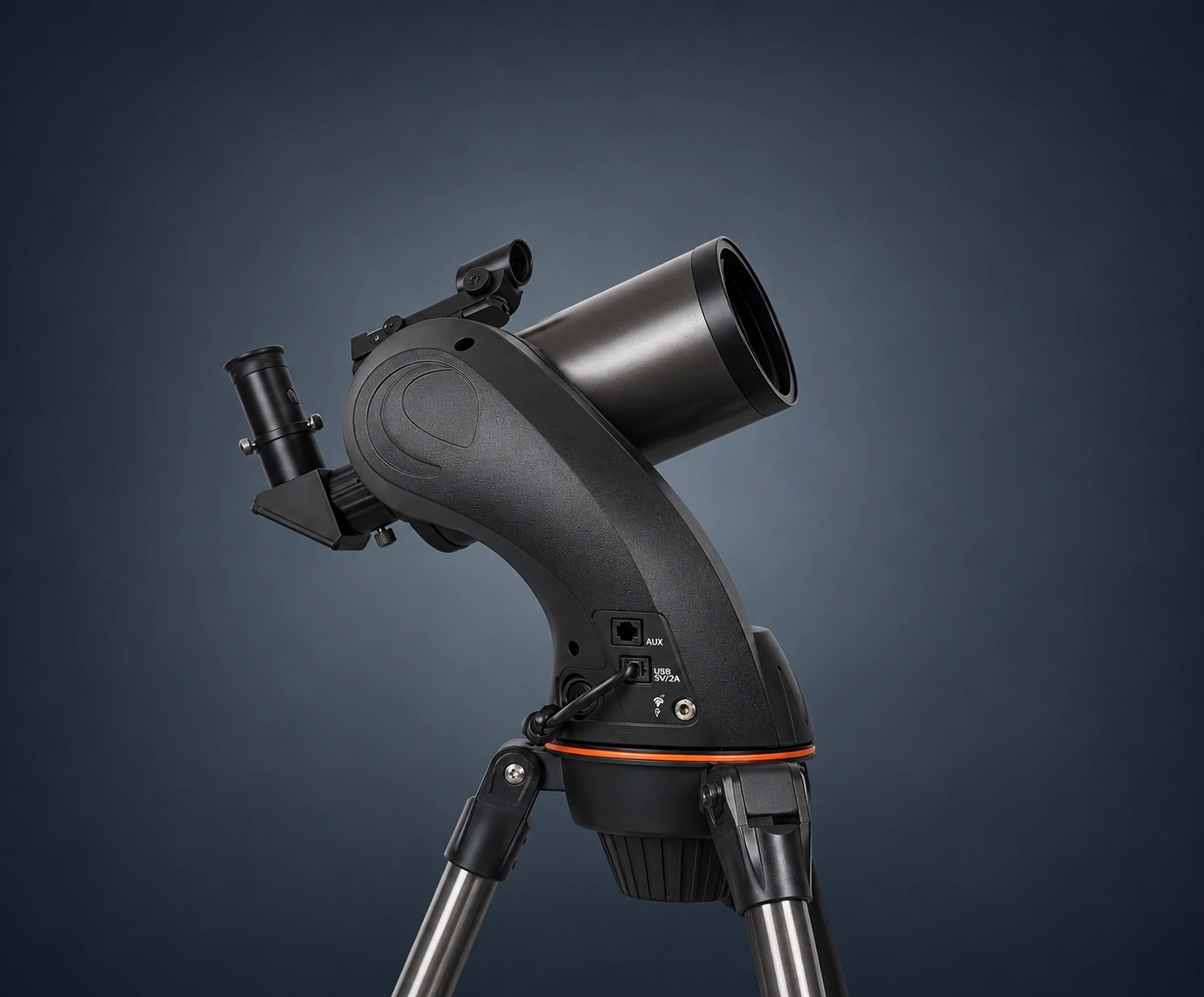
There is no built-in battery that comes with the mount. This is funny at this point. We are surrounded by laptops, smartphones, and electric cars, and Celestron doesn’t send a battery with this telescope.
You have to get 8 AA batteries. This wouldn’t be that big of a deal if, as owners report, they didn’t run out in 5-6 hours.
Celestron doesn’t send a battery, which is ridiculous.
In the end, you will probably attach your own power source to the telescope, which usually messes up alignment and is a burden to carry around.
A battery is not something to be excluded to save the cost. This is the most important problem with Celestron NexStar 90 SLT.
Is NexStar Mount Reliable?
Owners find the NexStar Mount surprisingly reliable. If aligned correctly, it will work well 99% of the time.
But that 1% is double trouble. It is impossible to fix the mount if the problem is internal, so you will have to send the telescope to Celestron Customer Service. Owners describe them as usually very friendly and helpful to the best of their abilities, so we don’t have any problems with that.
But we suggest making sure that there is a Celestron Customer Service in your country. Otherwise, shipping and communication will become huge problems.
The Software
There are three options for using Celestron NexStar 90 SLT.
The first and most basic one is the Hand Controller. It is an antique technology, but owners report it works without problems.
The second is getting a Celestron WiFi Adapter for 75$ and using the SkyPortal App. But beware, owners report the connection is not perfectly reliable.
The third solution is using third-party software. We don’t recommend this option if you are not going into serious astrophotography.
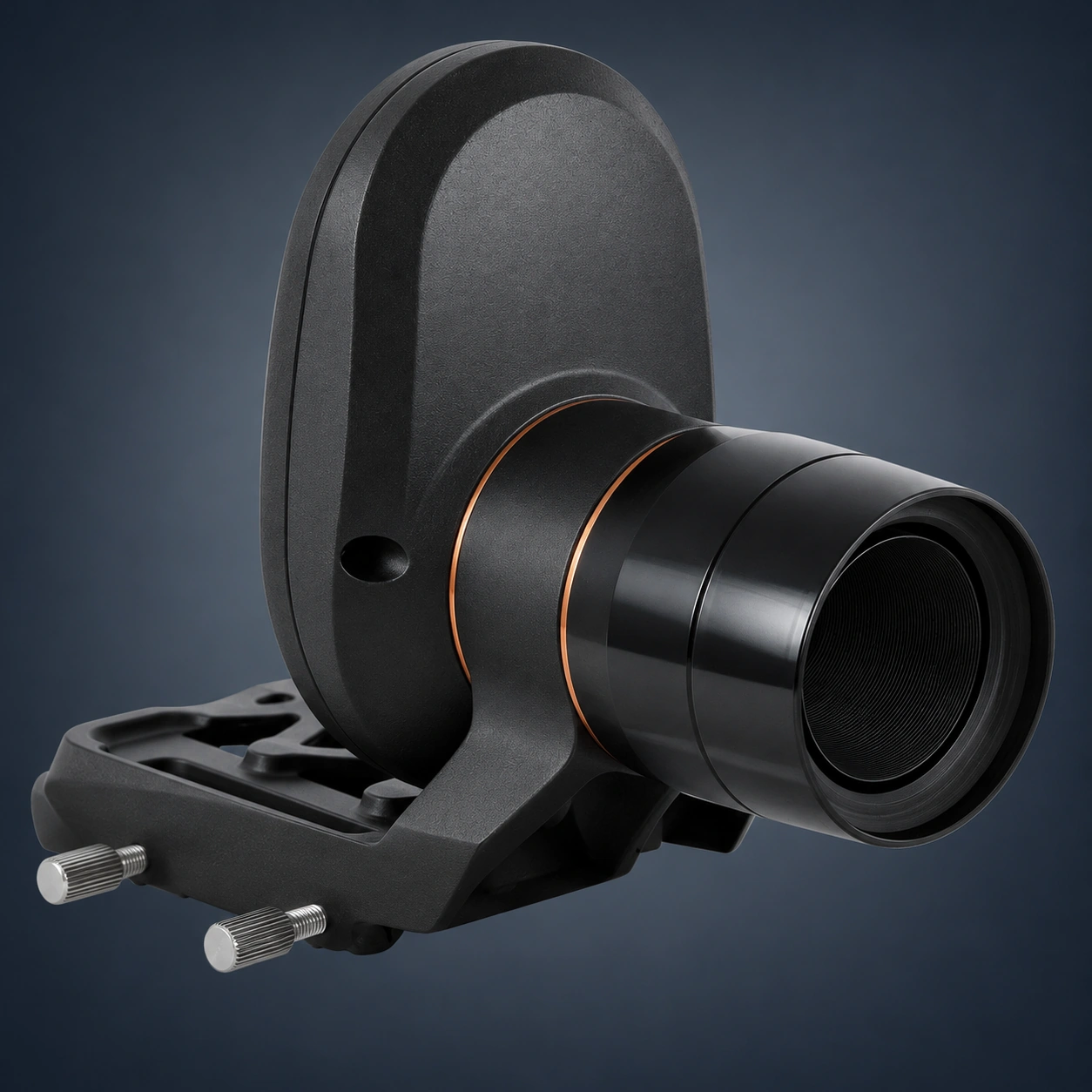
Celestron StarSense
Celestron implements StarSense compatibility to all of their computerized telescopes. It is an awesome technology that auto aligns the telescope, but the upgrade is costly. The camera costs as much as the telescope itself.
Tripod
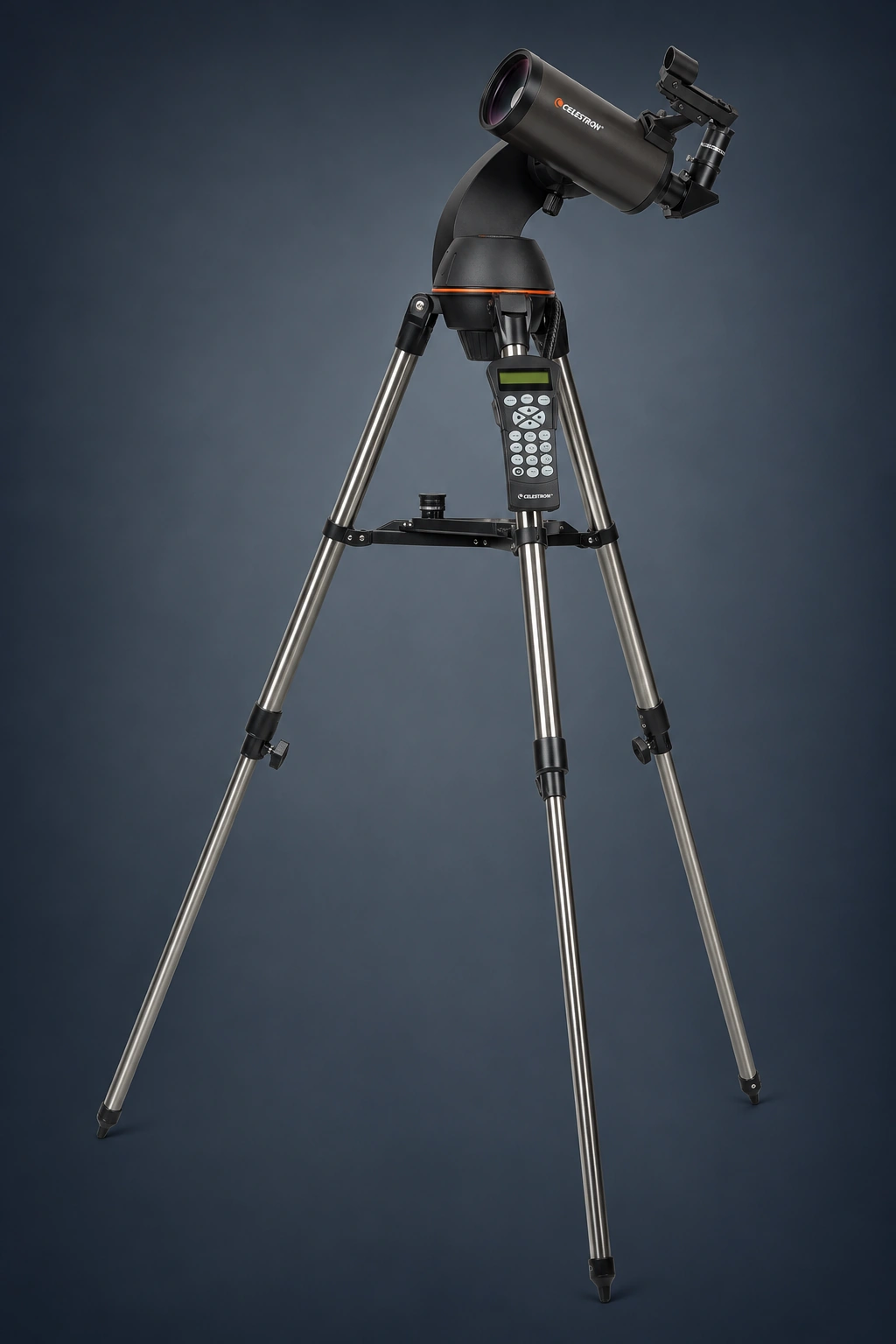
The tripod is a thinned-out steel model. It is not the usual rock-solid steel tripod that comes with expensive telescope models. But, it is vastly better than aluminum versions that is common among budget telescopes.
The optical tube is delightfully short. Although the tripod is not rock-solid, owners report the optical tube’s movements don’t create a lot of imbalance.
The tripod could have been better, but it is not a huge problem.
Accessories
The accessories are smart, budget choices. The important parts are expensive materials, and the lesser important parts are cheap.
The accessories are cheap but smart choices.
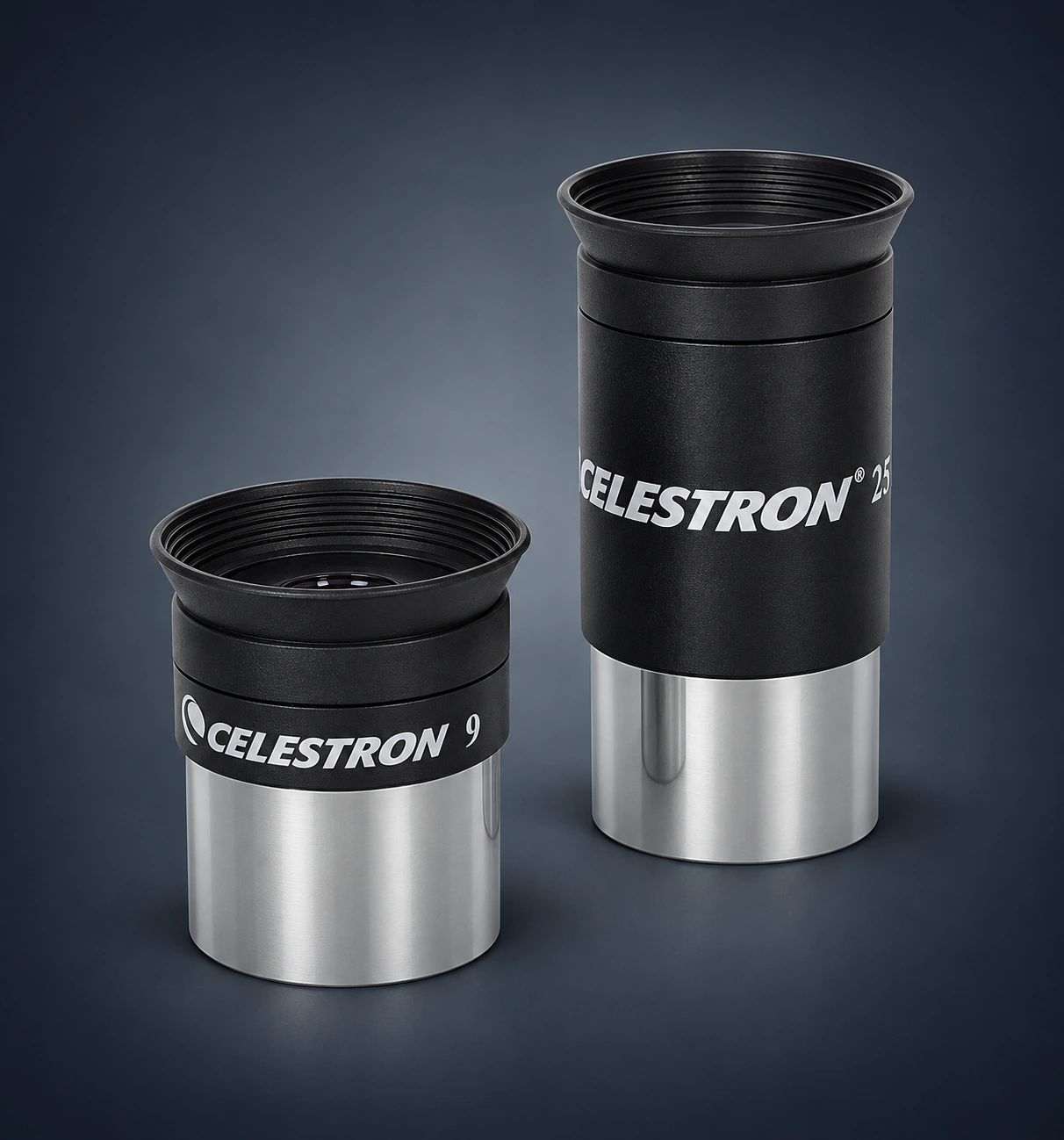
The eyepieces are Kellner models. They are as budget as it gets, and should be changed as soon as possible. But they are changed most of the time with any telescope, so it is OK that they are cheap versions. They are enough to get you started.
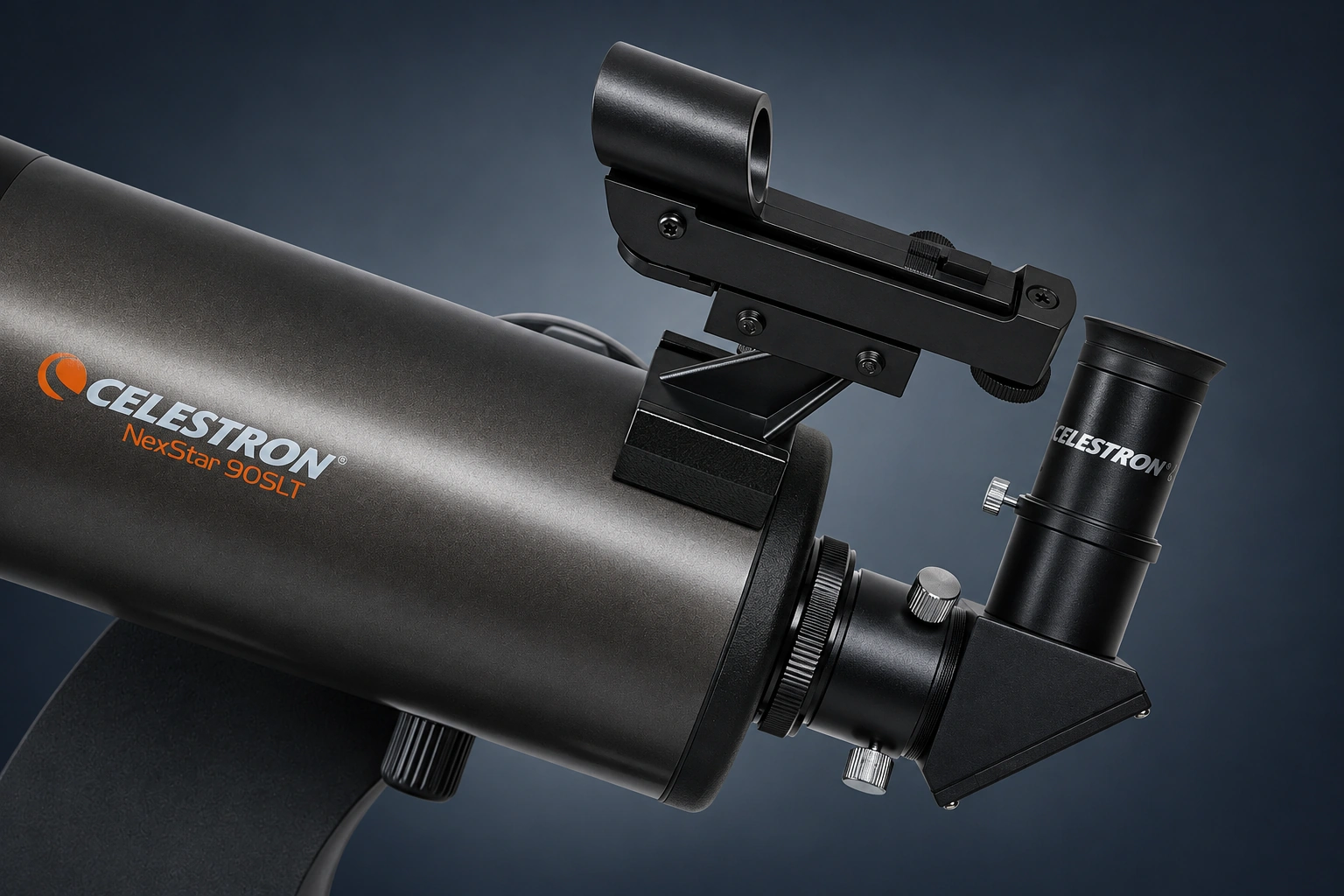
The finder is also a budget choice. It is a red dot model. But that is also OK since you will only use it when first aligning the telescope.
Owners report the star diagonal works pretty well, and it is an important part. Smart move from Celestron.
Owners report the focuser works surprisingly well, considering it moves the primary mirror instead of the eyepiece. Although it causes some image shift, it is hardly noticeable.
Celestron did a good job with the accessories. There is not a single part that is unnecessary that drives the price up.
Drawbacks
The battery problem is unsolvable. You are bound to an external power source. This would be a deal-breaker for most people.
Deep space performance is disappointing.
The eyepieces that come with the telescope are cheap.
Conclusion
NexStar 90 SLT is among the better choices in the realm of computerized, starter telescopes. It is not for everybody, but it has major advantages over its competitors in this price range.
If you can manage the battery problem, Celestron NexStar 90 SLT is a reasonable choice.
Disclaimer: This review is based on official specifications, owner reports, and independent reviews. We have not personally tested the Celestron NexStar 90 SLT, but we’ve gathered information from multiple trusted sources to provide a fair and accurate summary.