'%20stroke='none'%3e%3cpath%20d='M%20761%2039%20L%20760%2062%20L%20912%20216%20L%201003%20329%20L%201071%20463%20L%201112%20603%20L%201132%20608%20L%201149%20582%20L%201165%20516%20L%201163%20403%20L%201145%20330%20L%201088%20216%20L%201017%20132%20L%20918%2062%20L%20821%2034%20Z'/%3e%3cpath%20d='M%201429%20756%20L%201409%20755%20L%201383%20772%20L%201233%20919%20L%201123%201002%20L%201003%201064%20L%20862%201111%20L%20852%201131%20L%20925%201156%20L%201044%201155%20L%201142%201131%20L%201246%201080%20L%201313%201029%20L%201395%20932%20L%201432%20834%20Z'/%3e%3cpath%20d='M%20219%20262%20L%20223%20282%20L%20251%20290%20L%20481%20262%20L%20625%20265%20L%20737%20289%20L%20852%20332%20L%20878%20326%20L%20869%20291%20L%20841%20255%20L%20757%20187%20L%20658%20144%20L%20550%20125%20L%20440%20130%20L%20361%20154%20L%20254%20218%20Z'/%3e%3cpath%20d='M%201283%20295%20L%201246%20293%20L%201230%20312%20L%201226%20499%20L%201208%20632%20L%201174%20743%20L%201091%20894%20L%201087%20930%20L%201148%20912%20L%201237%20836%20L%201292%20760%20L%201335%20660%20L%201355%20554%20L%201351%20440%20L%201329%20358%20L%201311%20322%20Z'/%3e%3cpath%20d='M%20518%201092%20L%20526%201128%20L%20551%201167%20L%20633%201247%20L%20724%201300%20L%20821%201333%20L%20906%201345%20L%201023%201337%20L%201100%201306%20L%201152%201259%20L%201147%201240%20L%201118%201230%20L%20913%201217%20L%20782%201194%20L%20655%201151%20L%20545%201092%20Z'/%3e%3cpath%20d='M%20534%20340%20L%20477%20325%20L%20368%20337%20L%20284%20370%20L%20191%20433%20L%20123%20504%20L%2073%20591%20L%2051%20667%20L%2057%20762%20L%2076%20764%20L%20115%20731%20L%20221%20592%20L%20305%20504%20L%20416%20422%20L%20537%20354%20Z'/%3e%3cpath%20d='M%20279%20649%20L%20220%20704%20L%20178%20781%20L%20149%20884%20L%20144%201001%20L%20158%201085%20L%20189%201158%20L%20246%201235%20L%20304%201279%20L%20317%201269%20L%20319%201234%20L%20271%20953%20L%20272%20823%20L%20297%20675%20L%20294%20651%20Z'/%3e%3cpath%20d='M%20340%20984%20L%20329%201040%20L%20349%201141%20L%20392%201232%20L%20447%201305%20L%20519%201372%20L%20613%201424%20L%20715%201441%20L%20759%201431%20L%20757%201407%20L%20727%201375%20L%20578%201256%20L%20502%201183%20L%20441%201111%20L%20362%20993%20Z'/%3e%3c/g%3e%3c/svg%3e)
Introduction
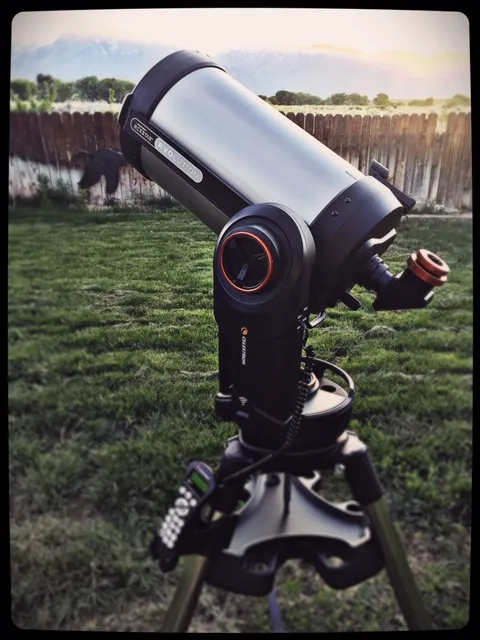
Celestron’s NexStar Evolution 9.25” is the largest of the three NexStar Evolution telescopes in Celestron’s lineup. The Evolution 9.25” is one of several tube/mount combinations offered by Celestron featuring the unusual C9.25 optical tube, and features an alt-azimuth GoTo mount with motorized tracking and GoTo. The C9.25 sits squarely in the middle between typical 8” and 10” telescopes in terms of performance. Compared to the other C9.25/mount packages, the Evolution 9.25 is arguably the easiest to set up and use, but the least stable or capable.
Pros
- Large 9.25” aperture great for lunar, planetary, and deep-sky viewing
- Great optics
- GoTo mount with built-in batteries
- Decent included accessories
Cons
- Quite heavy/bulky
- Mount head is not the sturdiest due to design
- Long focal length and narrow field of view
- Not ideal for long-exposure astrophotography
- Expensive
Available at These Vendors
The C9.25 Optical Tube
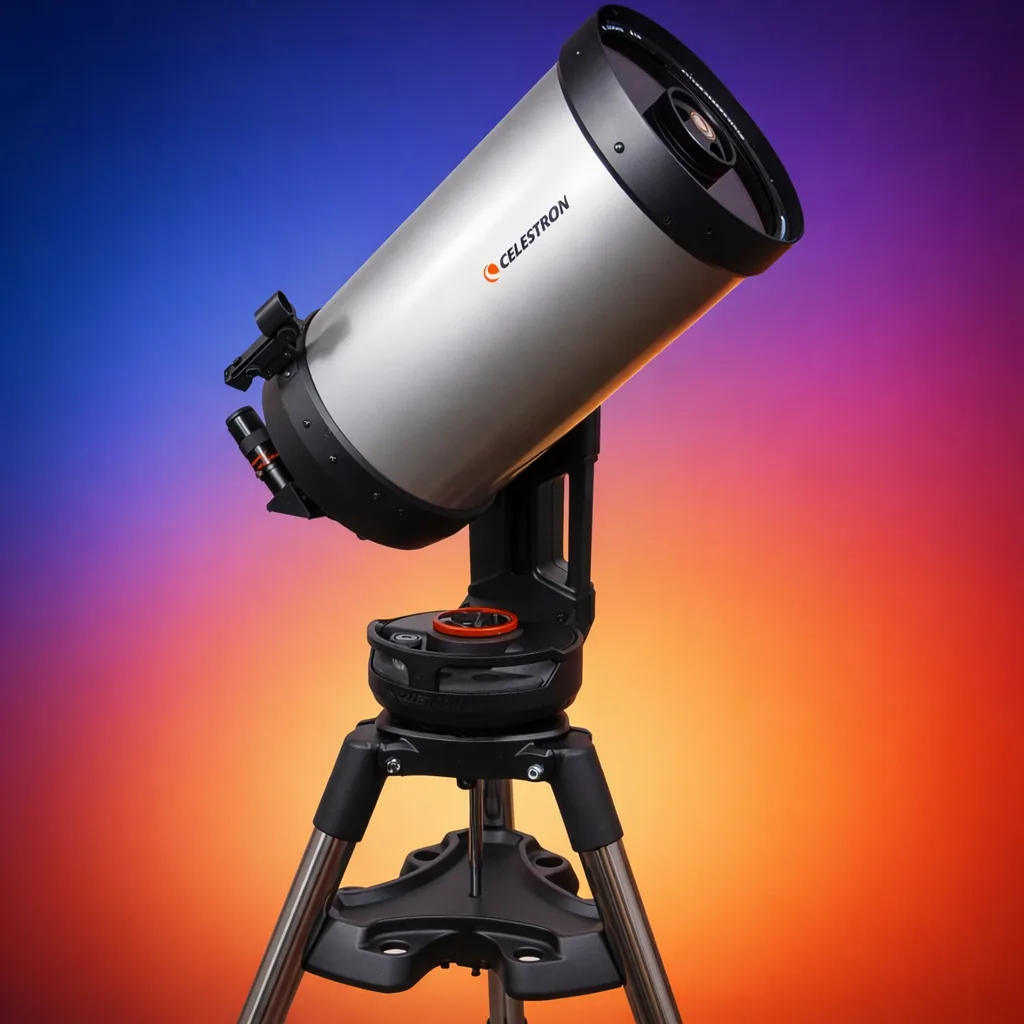
The C9.25 XLT optical tube supplied with the Evolution 9.25 is a 9.25” (235mm) f/10 Schmidt-Cassegrain telescope (SCT) which uses a pair of spherical mirrors (concave primary, convex secondary) and a Schmidt corrector plate to achieve sharp images. Both mirrors have weaker curvature than is standard for an SCT leading to an abnormally long tube proportionally and slightly easier collimation requirements, along with typical superior optical quality, compared to most other SCT models on average. Quality control is also better too, on account of the rather niche audience of the C9.25.
As with most Schmidt-Cassegrain and other catadioptric telescopes, the C9.25’s focusing system is based on a sliding rod that moves the primary mirror up and down the tube to adjust the spacing of the optics and thus move the focal plane. Your accessories are fixed to the back of the telescope, and attach via standard SCT threads which allow you to place cameras, visual adapters, or focal reducers on the back. The secondary mirror of the C9.25 can be removed in seconds without any tools to put the Starizona HyperStar corrector lens in its place and convert the C9.25 into a super-fast f/2 (470mm focal length) Schmidt Camera optical system for astrophotography, though this is an expensive upgrade.
The NexStar Evolution Mount & Heavy-Duty Tripod
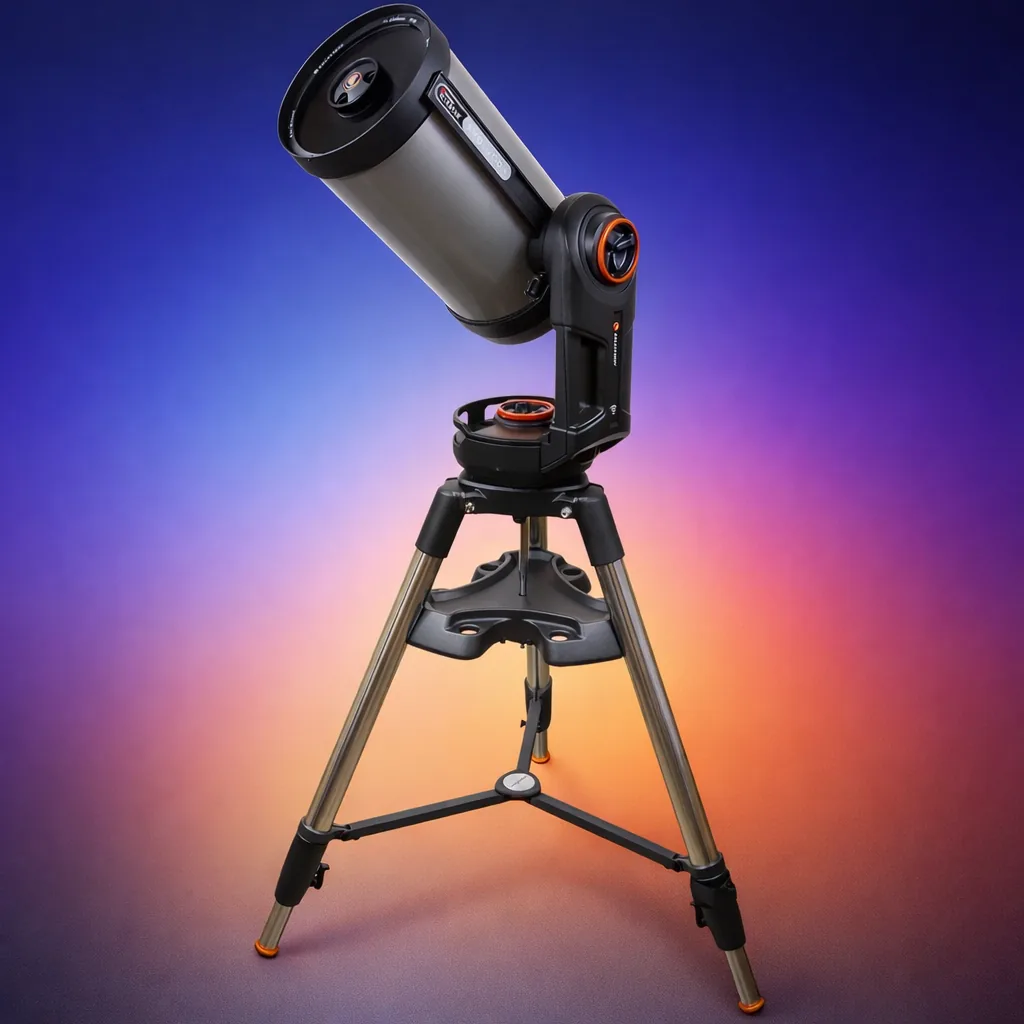
The Evolution 9.25 uses the same NexStar Evolution one-armed fork mount as the other models in the line. The NexStar Evolution mount is an alt-azimuth GoTo mount which you can control either with the provided hand controller or a smartphone/tablet app like SkySafari or the free Celestron SkyPortal app. The mount can technically be converted to an equatorial fork with the purchase of a wedge, but a dedicated equatorial mount is superior. The gears are all-metal and provide accurate tracking, and you can technically unlock the clutches on the mount to aim it manually with the power swithced off (though we wouldn’t recommend it). The mount also has a built-in rechargeable lithium battery, so you don’t need to buy one separately or plow through disposable batteries with this scope.
The Evolution 9.25 includes a heavier-duty tripod than the one supplied with the 8” and 6” models; it’s borrowed from the CPC fork mounts. However, the one-armed design of the Evolution mount is a little bouncy with the C9.25 optical tube and can also have some issues when trying to balance the tube with heavy accessories on the back.
Accessories
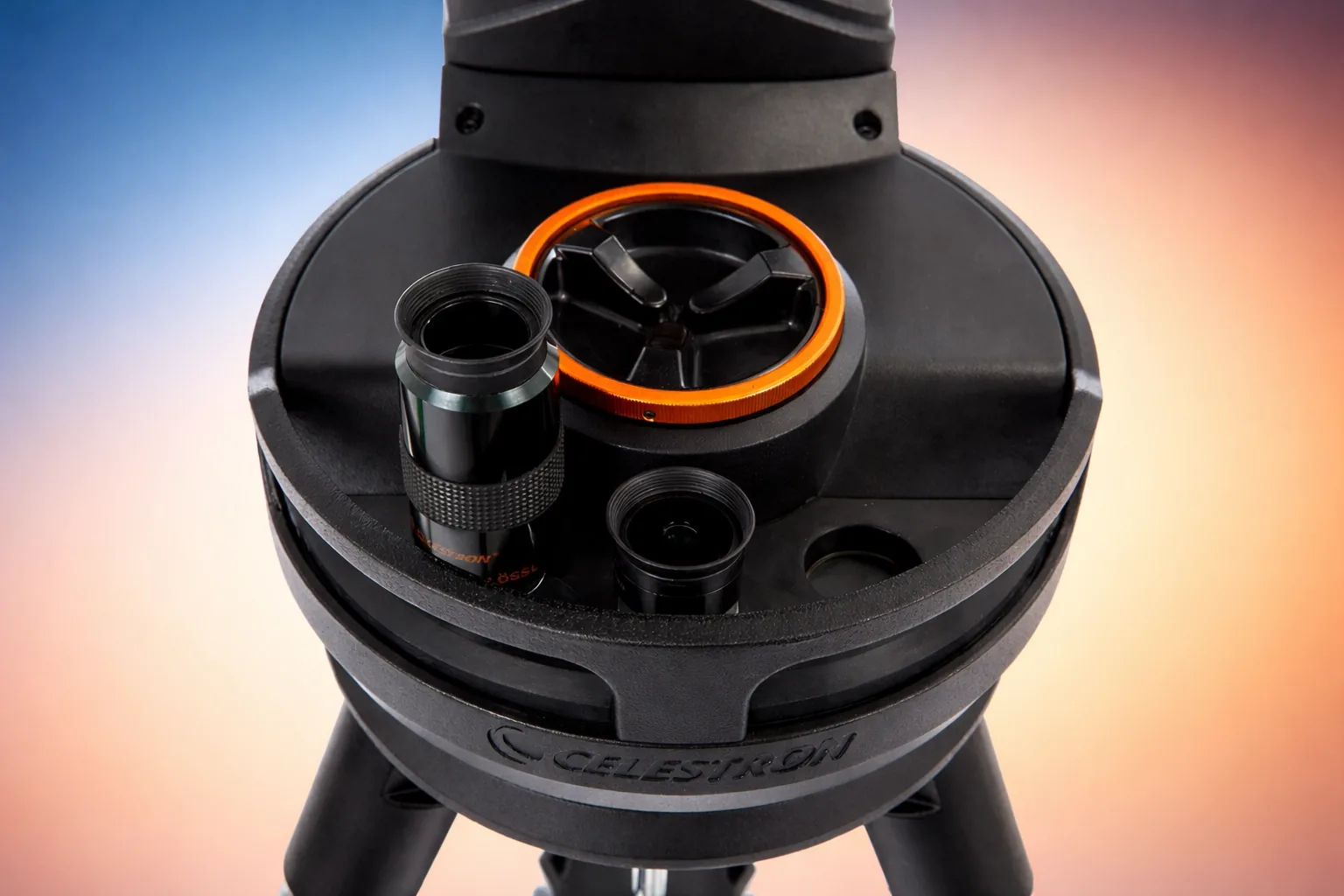
The NexStar Evolution 9.25 comes with a 1.25” screw-on visual back and a 1.25” prism star diagonal. These are fine, but for a wider field of view, an f/6.3 reducer or a 2” diagonal and eyepieces would be a good idea to invest in. Two eyepieces are supplied - a 40mm “E-Lux” Plossl yielding 59x magnification, and a 13mm providing 181x. These are fine to start out with, though you’ll probably want more eyepieces eventually. The scope also includes a red dot finder for initial alignment on the sky.
What can you see?
The NexStar Evolution 9.25 is excellent for both Solar System targets and deep-sky observing thanks to the C9.25 optical tube’s large 9.25″ aperture.
Inner planets like Mercury and Venus appear as smooth crescent or gibbous disks with little surface detail due to their cloud cover, though the C9.25 has an easier time resolving Mercury than smaller telescopes.
The Moon looks spectacular, with the Evolution 9.25 easily revealing fine details such as craters and mountain ranges only a few miles across.
Mars is often too distant to show much detail, but during favorable oppositions and steady seeing, the C9.25 can resolve polar ice caps and a few dark surface features.
Jupiter is a highlight: its four largest moons are obvious at low magnification, while higher power reveals colorful cloud bands, the Great Red Spot, and moon transits with their accompanying shadows.
Saturn displays its rings in stunning detail, with the Cassini Division clearly visible and the Encke Gap detectable under excellent seeing. Subtle cloud belts and several moons are also observable.
Uranus appears as a small bluish disk at high magnification, and under good conditions, one or two faint moons may be visible. Neptune is more challenging to distinguish from a star, though its bright moon Triton can usually be seen nearby.
Pluto sits at the limit of the telescope’s reach, requiring dark skies and careful star-hopping to glimpse it among surrounding stars.
For deep-sky objects, light pollution plays a major role. Globular clusters are easily resolved under most conditions, and open clusters look impressive, though very large ones may not fit within the C9.25’s narrow field of view due to its long 2350 mm focal length. Galaxies and nebulae benefit greatly from dark skies, where dust lanes in bright galaxies and nebulae like the Orion Nebula or the Swan Nebula become striking.
Drawbacks
As previously mentioned, the Evolution 9.25’s mount head is a little jiggly with the C9.25 optical tube and also can have issues with achieving proper balance with 2” accessories without hitting the mount with the star diagonal attached to the back of the tube. And while you can use the scope for deep-sky imaging with a wedge, an equatorial mount would be a much better choice. If astrophotography is your main goal, the Advanced VX-mounted C9.25 package would probably be a better choice. If you want something more portable, we’d consider the NexStar Evolution 8 instead.
Conclusion
The Celestron NexStar Evolution 9.25 is a great telescope. However, it is significantly less portable or stable than the 8” Evolution and provides rather little gain in light gathering or resolving power. As such, we’d recommend looking at the other C9.25 packages Celestron offers, as well as possibly downsizing to an 8” SCT, before purchasing.