'%20stroke='none'%3e%3cpath%20d='M%20761%2039%20L%20760%2062%20L%20912%20216%20L%201003%20329%20L%201071%20463%20L%201112%20603%20L%201132%20608%20L%201149%20582%20L%201165%20516%20L%201163%20403%20L%201145%20330%20L%201088%20216%20L%201017%20132%20L%20918%2062%20L%20821%2034%20Z'/%3e%3cpath%20d='M%201429%20756%20L%201409%20755%20L%201383%20772%20L%201233%20919%20L%201123%201002%20L%201003%201064%20L%20862%201111%20L%20852%201131%20L%20925%201156%20L%201044%201155%20L%201142%201131%20L%201246%201080%20L%201313%201029%20L%201395%20932%20L%201432%20834%20Z'/%3e%3cpath%20d='M%20219%20262%20L%20223%20282%20L%20251%20290%20L%20481%20262%20L%20625%20265%20L%20737%20289%20L%20852%20332%20L%20878%20326%20L%20869%20291%20L%20841%20255%20L%20757%20187%20L%20658%20144%20L%20550%20125%20L%20440%20130%20L%20361%20154%20L%20254%20218%20Z'/%3e%3cpath%20d='M%201283%20295%20L%201246%20293%20L%201230%20312%20L%201226%20499%20L%201208%20632%20L%201174%20743%20L%201091%20894%20L%201087%20930%20L%201148%20912%20L%201237%20836%20L%201292%20760%20L%201335%20660%20L%201355%20554%20L%201351%20440%20L%201329%20358%20L%201311%20322%20Z'/%3e%3cpath%20d='M%20518%201092%20L%20526%201128%20L%20551%201167%20L%20633%201247%20L%20724%201300%20L%20821%201333%20L%20906%201345%20L%201023%201337%20L%201100%201306%20L%201152%201259%20L%201147%201240%20L%201118%201230%20L%20913%201217%20L%20782%201194%20L%20655%201151%20L%20545%201092%20Z'/%3e%3cpath%20d='M%20534%20340%20L%20477%20325%20L%20368%20337%20L%20284%20370%20L%20191%20433%20L%20123%20504%20L%2073%20591%20L%2051%20667%20L%2057%20762%20L%2076%20764%20L%20115%20731%20L%20221%20592%20L%20305%20504%20L%20416%20422%20L%20537%20354%20Z'/%3e%3cpath%20d='M%20279%20649%20L%20220%20704%20L%20178%20781%20L%20149%20884%20L%20144%201001%20L%20158%201085%20L%20189%201158%20L%20246%201235%20L%20304%201279%20L%20317%201269%20L%20319%201234%20L%20271%20953%20L%20272%20823%20L%20297%20675%20L%20294%20651%20Z'/%3e%3cpath%20d='M%20340%20984%20L%20329%201040%20L%20349%201141%20L%20392%201232%20L%20447%201305%20L%20519%201372%20L%20613%201424%20L%20715%201441%20L%20759%201431%20L%20757%201407%20L%20727%201375%20L%20578%201256%20L%20502%201183%20L%20441%201111%20L%20362%20993%20Z'/%3e%3c/g%3e%3c/svg%3e)
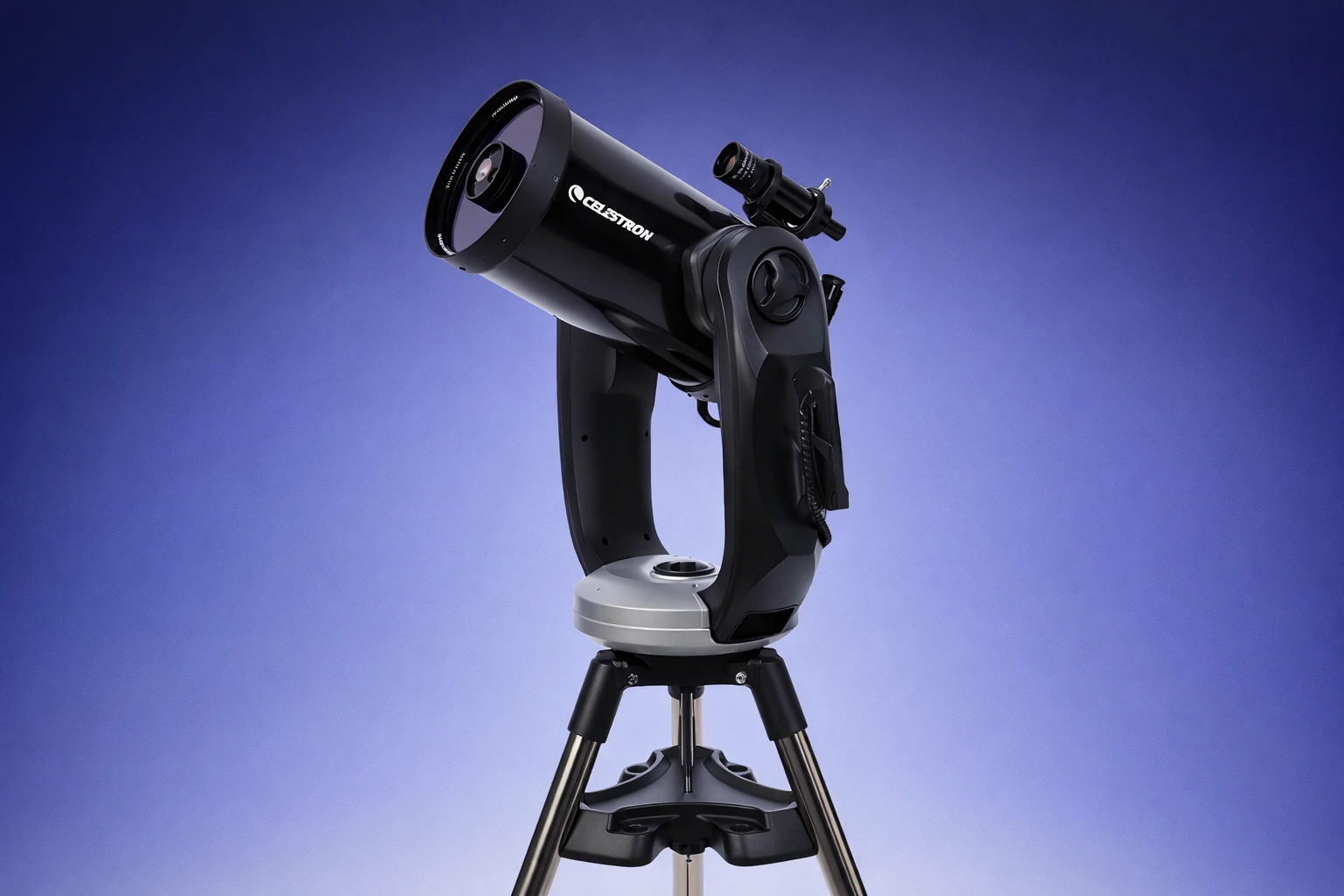
The Celestron CPC 925 GPS is a fairly versatile scope and is great if you do not plan on doing much imaging. However, it is not the most convenient, capable, or portable option for its aperture and price range, even when compared to the other C9.25 tube and mount packages Celestron offers.
Pros
- Large 9.25-inch aperture is great for lunar, planetary, and deep-sky viewing
- Simple setup and easy to use
- GoTo and motorized tracking functionality
- Great optics, ideal for planetary imaging
Cons
- Fairly heavy and bulky
- Mount is somewhat outdated and lacking in features
- Long focal length and narrow field of view
- Not ideal for long-exposure astrophotography
- Expensive
Available at These Vendors
Introduction
Celestron offers their C9.25 XLT optical tube with several mounts, such as the NexStar Evolution series, various German equatorial mounts, and of course the CPC fork mount. The C9.25 is often considered stronger for its aperture than other Celestron Schmidt-Cassegrain models because of its slightly different optical design. In practice, this can make it perform much closer to a larger C11 in lunar and planetary detail than its specifications alone might suggest, though it cannot match the C11’s image brightness on deep-sky objects.
The CPC 925 GPS, which pairs a C9.25 XLT optical tube with a double-arm fork mount, is a holdover from an earlier period in Celestron history. It is a good scope overall, but it is also quite heavy and expensive for what you get.
The C9.25 Optical Tube
The C9.25 is a 9.25-inch (235mm) Schmidt-Cassegrain telescope with a spherical concave primary mirror, a convex secondary mirror, and a Schmidt corrector lens at the front. It is an f/10 system with a 2350mm focal length, like Celestron’s other SCT offerings, but it uses a slower primary mirror around f/2.5 and a less strongly curved secondary mirror that multiplies focal length by about 4x instead of 5x.
This geometry tends to reduce sensitivity to collimation and optical defects compared to faster-primary SCT layouts, and the longer tube is one visible result of that design. The C9.25 is also produced in lower volume than some other Celestron SCT apertures, and many observers report consistently strong optical quality from unit to unit.
Like most SCTs, the C9.25 focuses by moving the primary mirror along a rod inside the tube. You can attach a visual back, star diagonal, reducer, or camera adapter at the rear. The secondary mirror can also be removed to install Starizona’s HyperStar lens, converting the telescope into an f/2 Schmidt camera at about 470mm focal length for wide-field astrophotography.
The CPC Fork Mount and Tripod
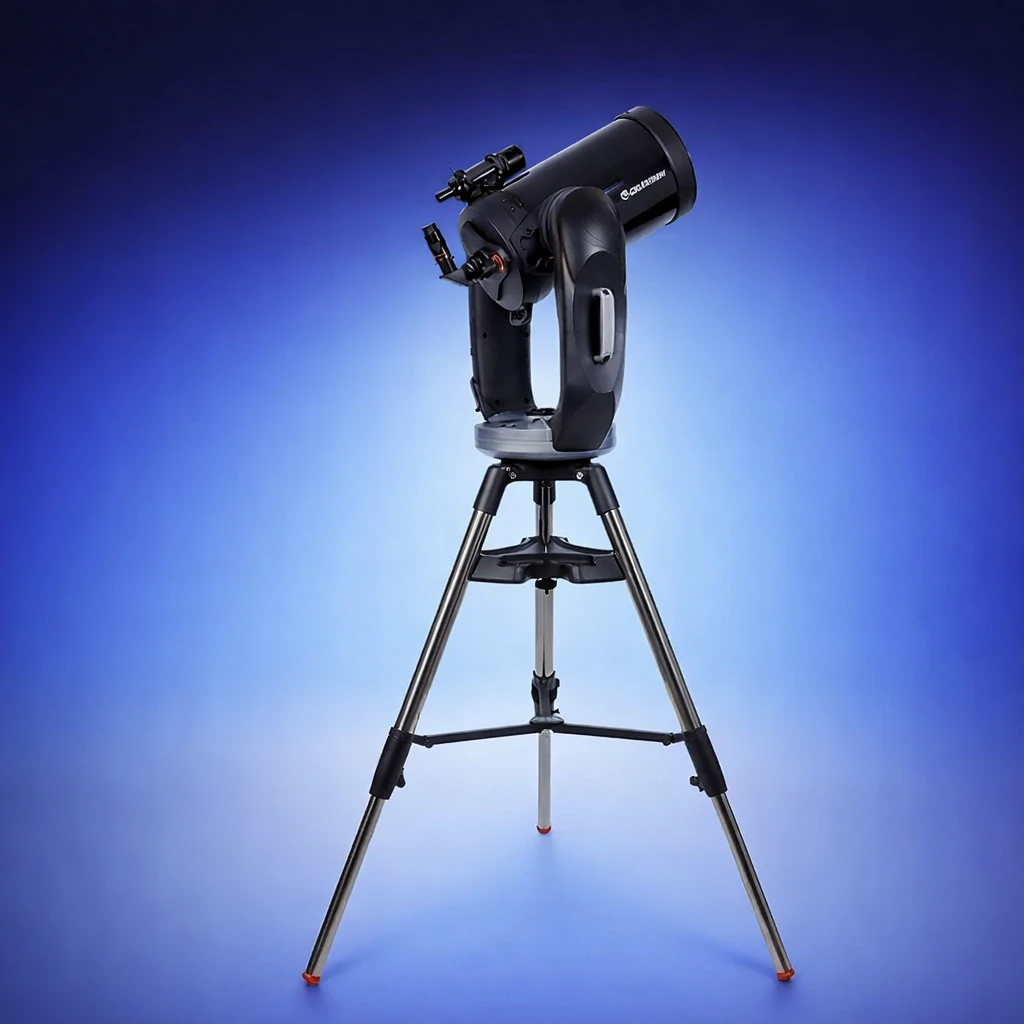
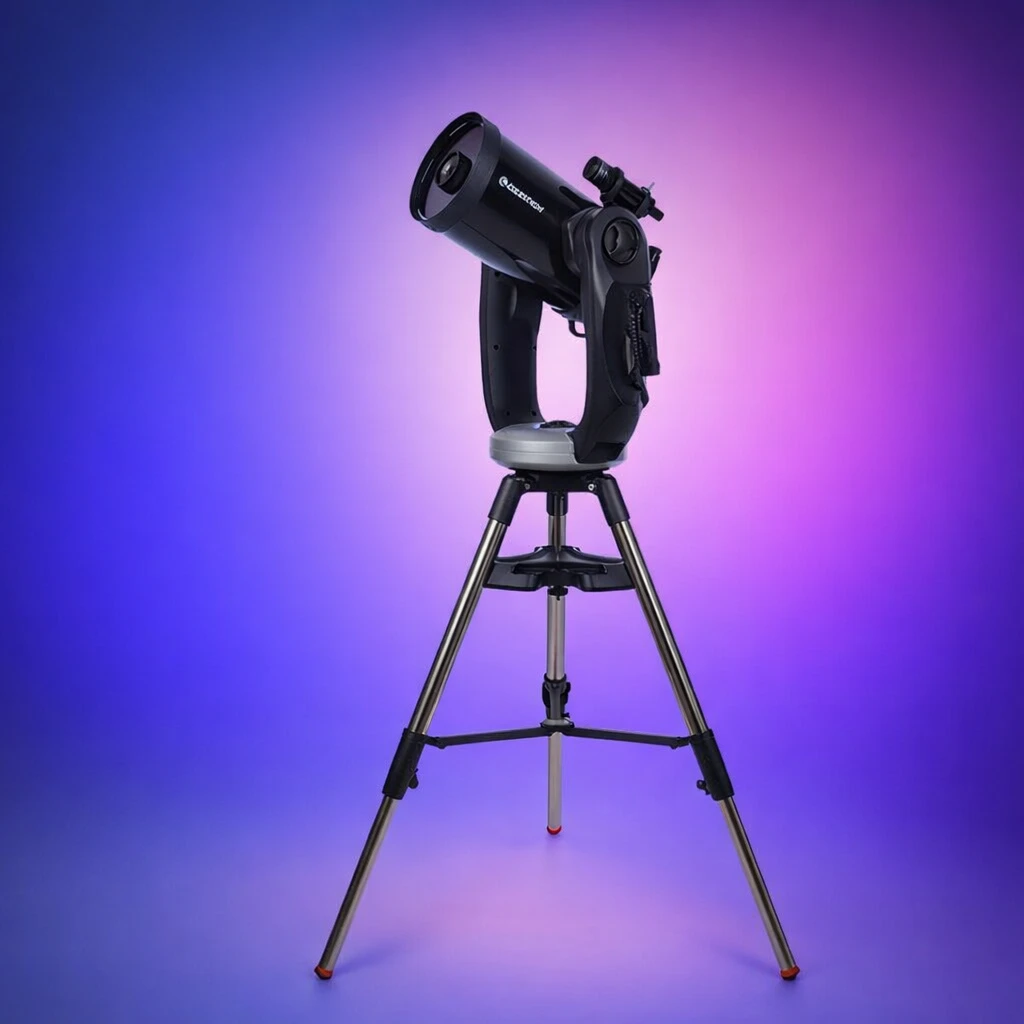
The CPC 925 uses a double-arm alt-azimuth GoTo fork mount. Setup is straightforward: place the scope and fork assembly on the tripod, level it, align on three stars, and begin observing. The built-in GPS automatically sets time, location, and date in the hand controller.
The tripod is very heavy duty, the mount is sturdy, and the internal gearing is metal. GoTo and tracking accuracy are both very good for visual use and planetary imaging. For long-exposure deep-sky imaging, however, you still need an equatorial wedge.
Accessories
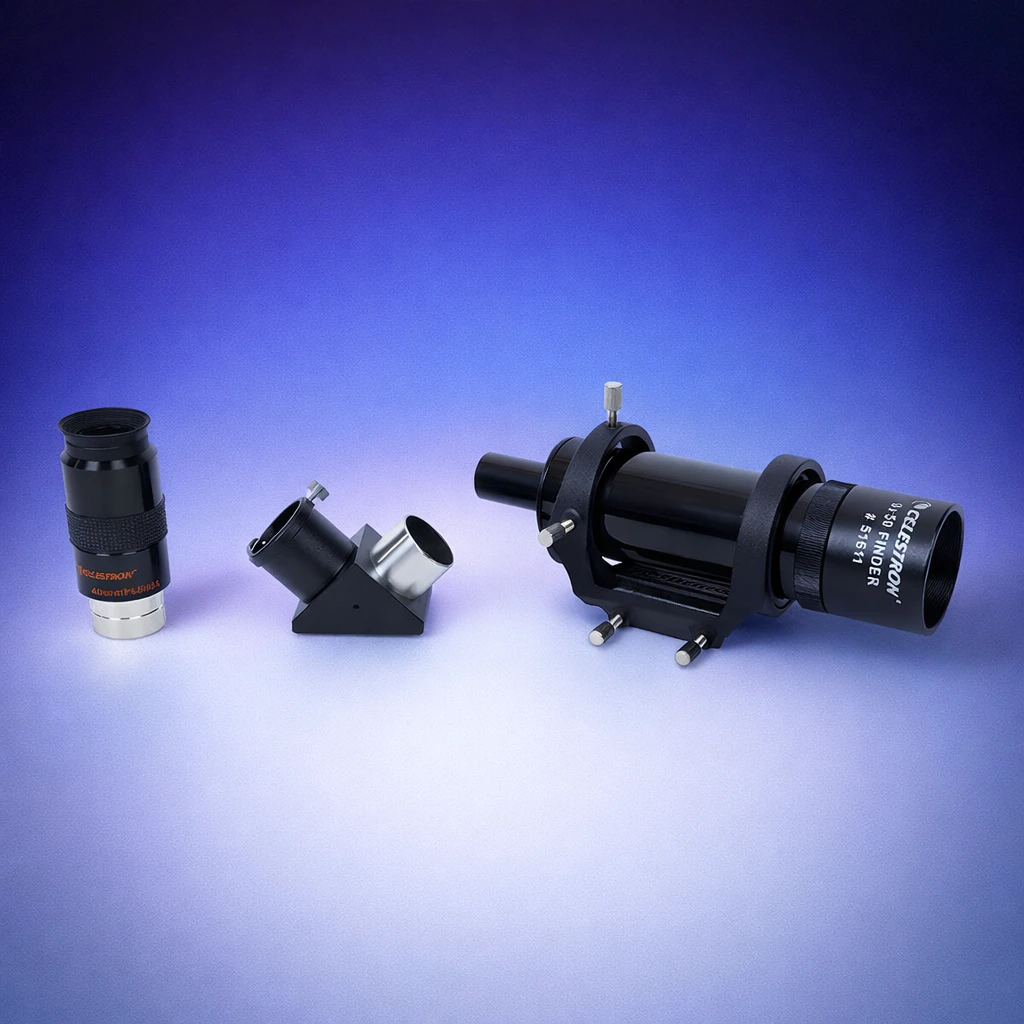
The CPC 925 GPS includes a 9x50 straight-through finder, a 1.25-inch screw-on visual back, a 1.25-inch prism diagonal, and a 40mm Plossl eyepiece. That eyepiece yields about 59x magnification and a true field of view of roughly 0.6 degrees, slightly larger than the full Moon.
Additional eyepieces are essentially required to get the most out of this telescope, and a 2-inch diagonal can help expand the maximum usable field of view.
What can you see?
The C9.25 is excellent for Solar System viewing and highly capable on deep-sky targets. Its 9.25-inch aperture gathers enough light for many nebulae, clusters, and galaxies while still resolving fine lunar and planetary detail under steady seeing.
Moon and Solar System Performance
| Object | What to Expect |
|---|---|
| Mercury and Venus | Mostly phases. Mercury remains tiny and low contrast, and Venus shows cloud tops rather than surface detail. |
| Moon | Detailed views of craterlets, ridges, and mountain peaks only a few miles across. |
| Mars | Near favorable oppositions, polar caps, dark surface markings, and occasional dust storms are visible. |
| Jupiter | Great Red Spot, cloud belts, and moon shadows are easy targets in good conditions. |
| Saturn | Rings are impressive; Cassini Division and multiple moons are visible at moderate to high power. |
| Uranus | Resolvable as a disk, though cloud detail is not visible and moons are difficult. |
| Neptune | Can be hard to distinguish from a star, but Triton is often detectable. |
| Pluto | Possible under dark skies as a very dim star-like point with careful identification. |
Deep-sky performance depends strongly on light pollution. Under severe light pollution, galaxies and globular clusters lose much of their detail, though open clusters and smaller planetary nebulae are still worthwhile. Under dark skies, the CPC 925 can resolve brighter globular clusters, show dust lanes in many galaxies, and provide excellent views of bright nebulae such as M42 (Orion Nebula) and M17 (Swan Nebula).
Drawbacks
The CPC 925 optical tube and fork assembly are effectively inseparable and weigh about 42 lb together. The challenge is not just the number, but lifting and placing that weight accurately onto the tripod center pin. It also takes up significant storage space compared to a typical 8-inch or 10-inch Dobsonian.
While the CPC 925 is easy to use and works well for planetary imaging, a German equatorial setup can be more flexible and usually breaks down into smaller parts. In many cases, a C9.25 on an equatorial mount is lighter to transport and more imaging-capable at a lower total price, though assembly and alignment are more complex.
Conclusion
The Celestron CPC 925 GPS is a strong choice if you prioritize simplicity, reliability, and long-term durability. It can easily satisfy visual observers for years. But if you prioritize portability, lower cost, or broader astrophotography flexibility, there are better options in the same aperture class.