'%20stroke='none'%3e%3cpath%20d='M%20761%2039%20L%20760%2062%20L%20912%20216%20L%201003%20329%20L%201071%20463%20L%201112%20603%20L%201132%20608%20L%201149%20582%20L%201165%20516%20L%201163%20403%20L%201145%20330%20L%201088%20216%20L%201017%20132%20L%20918%2062%20L%20821%2034%20Z'/%3e%3cpath%20d='M%201429%20756%20L%201409%20755%20L%201383%20772%20L%201233%20919%20L%201123%201002%20L%201003%201064%20L%20862%201111%20L%20852%201131%20L%20925%201156%20L%201044%201155%20L%201142%201131%20L%201246%201080%20L%201313%201029%20L%201395%20932%20L%201432%20834%20Z'/%3e%3cpath%20d='M%20219%20262%20L%20223%20282%20L%20251%20290%20L%20481%20262%20L%20625%20265%20L%20737%20289%20L%20852%20332%20L%20878%20326%20L%20869%20291%20L%20841%20255%20L%20757%20187%20L%20658%20144%20L%20550%20125%20L%20440%20130%20L%20361%20154%20L%20254%20218%20Z'/%3e%3cpath%20d='M%201283%20295%20L%201246%20293%20L%201230%20312%20L%201226%20499%20L%201208%20632%20L%201174%20743%20L%201091%20894%20L%201087%20930%20L%201148%20912%20L%201237%20836%20L%201292%20760%20L%201335%20660%20L%201355%20554%20L%201351%20440%20L%201329%20358%20L%201311%20322%20Z'/%3e%3cpath%20d='M%20518%201092%20L%20526%201128%20L%20551%201167%20L%20633%201247%20L%20724%201300%20L%20821%201333%20L%20906%201345%20L%201023%201337%20L%201100%201306%20L%201152%201259%20L%201147%201240%20L%201118%201230%20L%20913%201217%20L%20782%201194%20L%20655%201151%20L%20545%201092%20Z'/%3e%3cpath%20d='M%20534%20340%20L%20477%20325%20L%20368%20337%20L%20284%20370%20L%20191%20433%20L%20123%20504%20L%2073%20591%20L%2051%20667%20L%2057%20762%20L%2076%20764%20L%20115%20731%20L%20221%20592%20L%20305%20504%20L%20416%20422%20L%20537%20354%20Z'/%3e%3cpath%20d='M%20279%20649%20L%20220%20704%20L%20178%20781%20L%20149%20884%20L%20144%201001%20L%20158%201085%20L%20189%201158%20L%20246%201235%20L%20304%201279%20L%20317%201269%20L%20319%201234%20L%20271%20953%20L%20272%20823%20L%20297%20675%20L%20294%20651%20Z'/%3e%3cpath%20d='M%20340%20984%20L%20329%201040%20L%20349%201141%20L%20392%201232%20L%20447%201305%20L%20519%201372%20L%20613%201424%20L%20715%201441%20L%20759%201431%20L%20757%201407%20L%20727%201375%20L%20578%201256%20L%20502%201183%20L%20441%201111%20L%20362%20993%20Z'/%3e%3c/g%3e%3c/svg%3e)
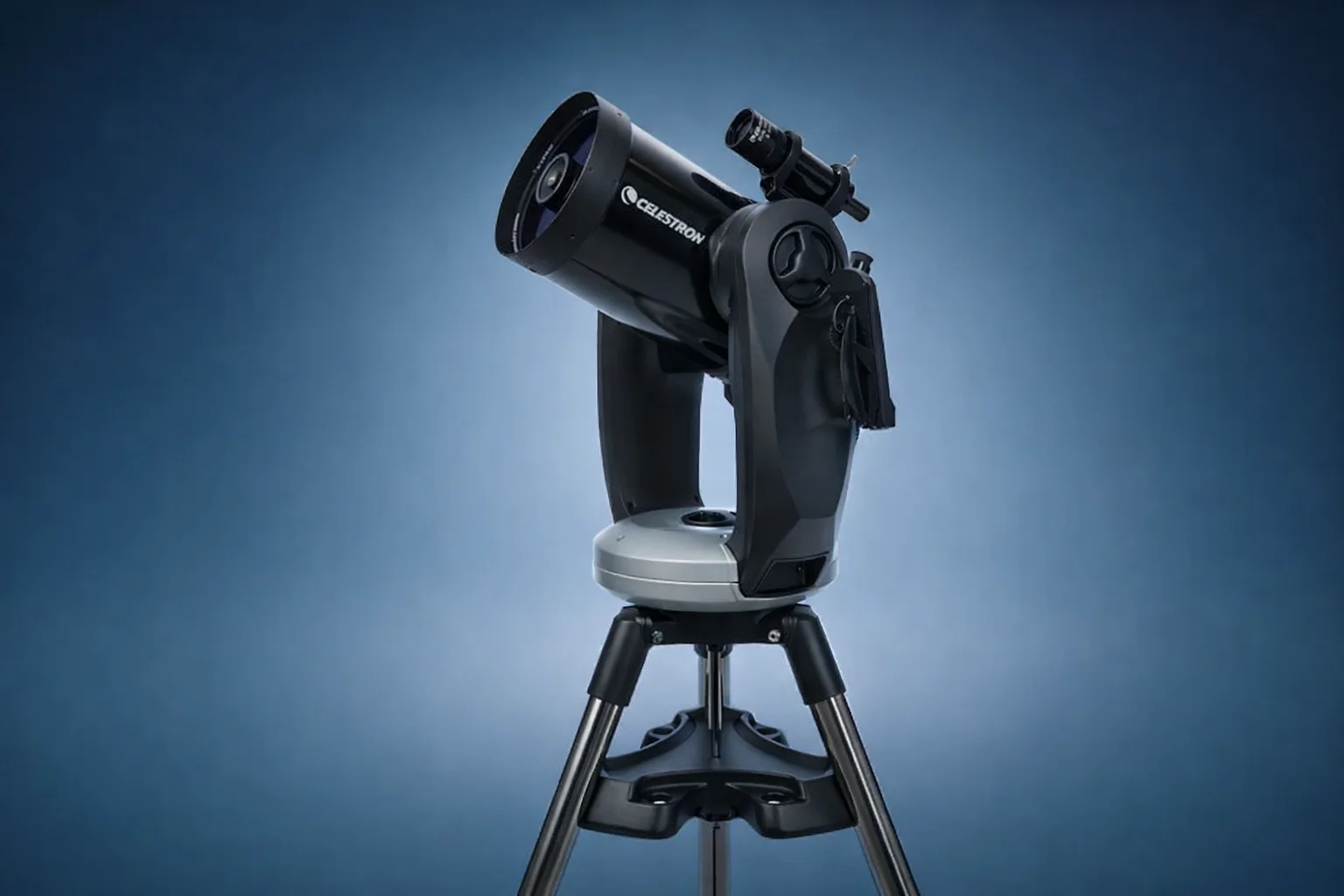
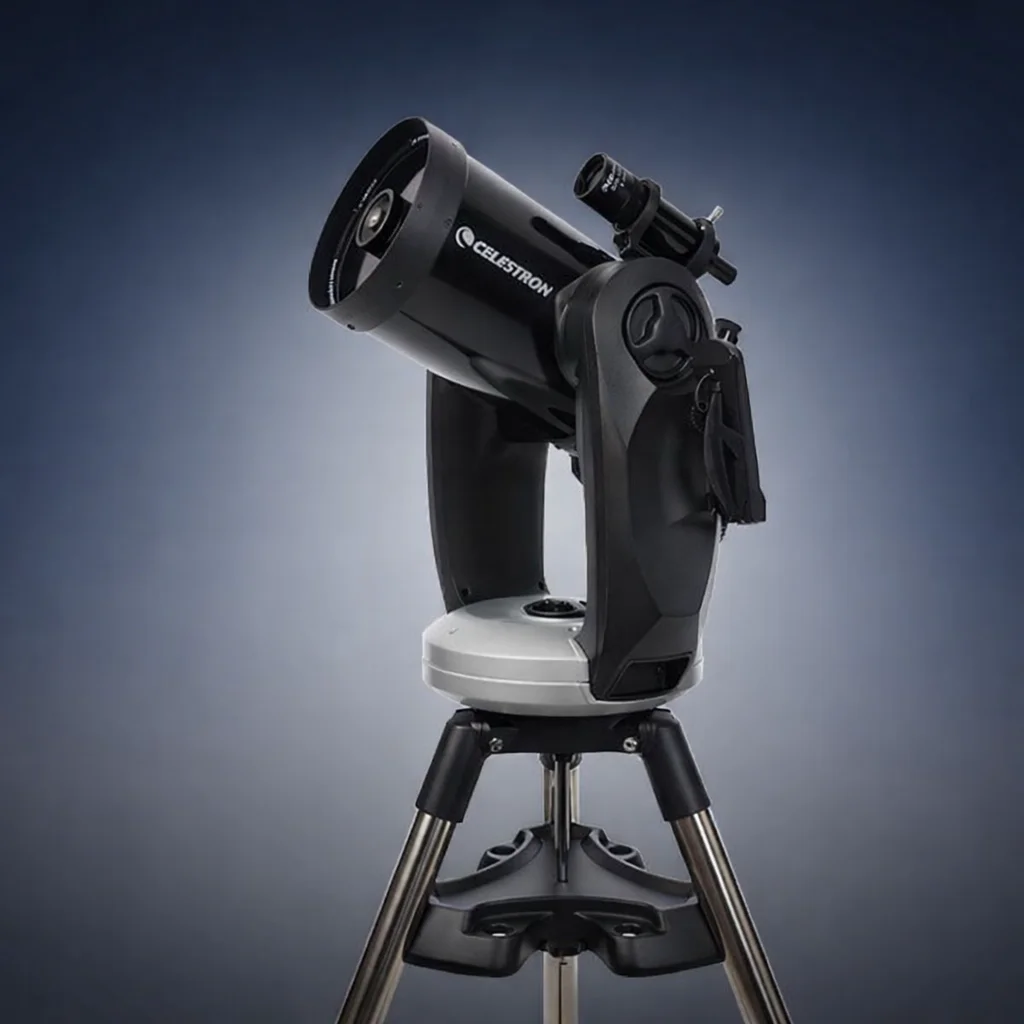
The Celestron CPC 800 GPS is a rather bulky telescope for its aperture, but it is packed with performance and versatility.
Pros
- 8-inch aperture is sufficient for lunar, planetary, and deep-sky viewing
- Simple assembly and easy setup
- GoTo and motorized tracking functionality
- Great optics for planetary imaging and visual use
Cons
- Not compact or easy to store
- Long focal length means a narrow field of view
- Not ideal for long-exposure deep-sky astrophotography without extra gear
- Expensive for what you get
Available at These Vendors
Introduction
Celestron’s famous C8 optical tube has been offered in a fork mount configuration since its creation in 1970. The CPC 800 is the last remnant of that legacy, as all other C8 configurations Celestron now sells are on single-armed forks or German equatorial mounts.
The CPC 800 is a fairly capable and portable telescope, though rather long in focal length compared to a typical 8-inch Dobsonian. You do not get as much convenience as, say, the NexStar Evolution 8 out of the box, but the CPC 800 can be adapted for some deep-sky astrophotography and is quick to set up.
The C8 Optical Tube
The C8 optical tube has been a mainstay of Celestron’s product line since 1970. It is an 8-inch (203mm) Schmidt-Cassegrain with a resulting focal length of 2032mm, achieved by folding the optical path with a concave spherical primary mirror and a convex secondary mirror that essentially magnifies the f/2 curve of the primary mirror.
You focus with a knob on the back that moves the primary mirror along a rod inside the telescope tube, and attach accessories such as a star diagonal or camera adapter to the back. The C8 XLT offered with the CPC 800 can be converted to an f/2 Schmidt camera system using Starizona’s HyperStar corrector, which installs in place of the secondary mirror. You can also get an f/6.3 reducer to make the C8 better suited for deep-sky astrophotography.
The CPC Fork Mount & Tripod
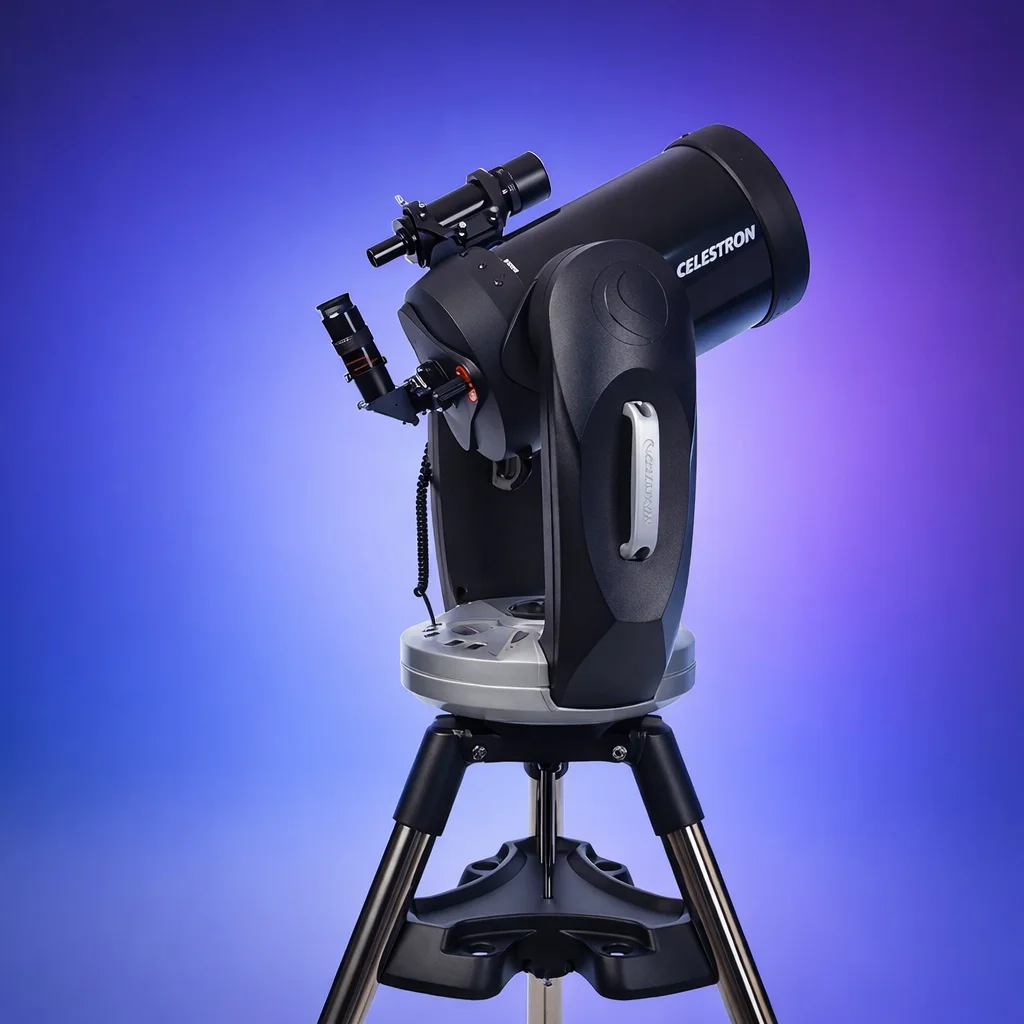
The CPC fork mount is an alt-azimuth GoTo design which can also be converted to an equatorial mount using Celestron’s equatorial wedge (sold separately). You can technically aim the CPC manually by unlocking the clutches, but only with the scope powered off, and it is generally not a good idea to do so anyway.
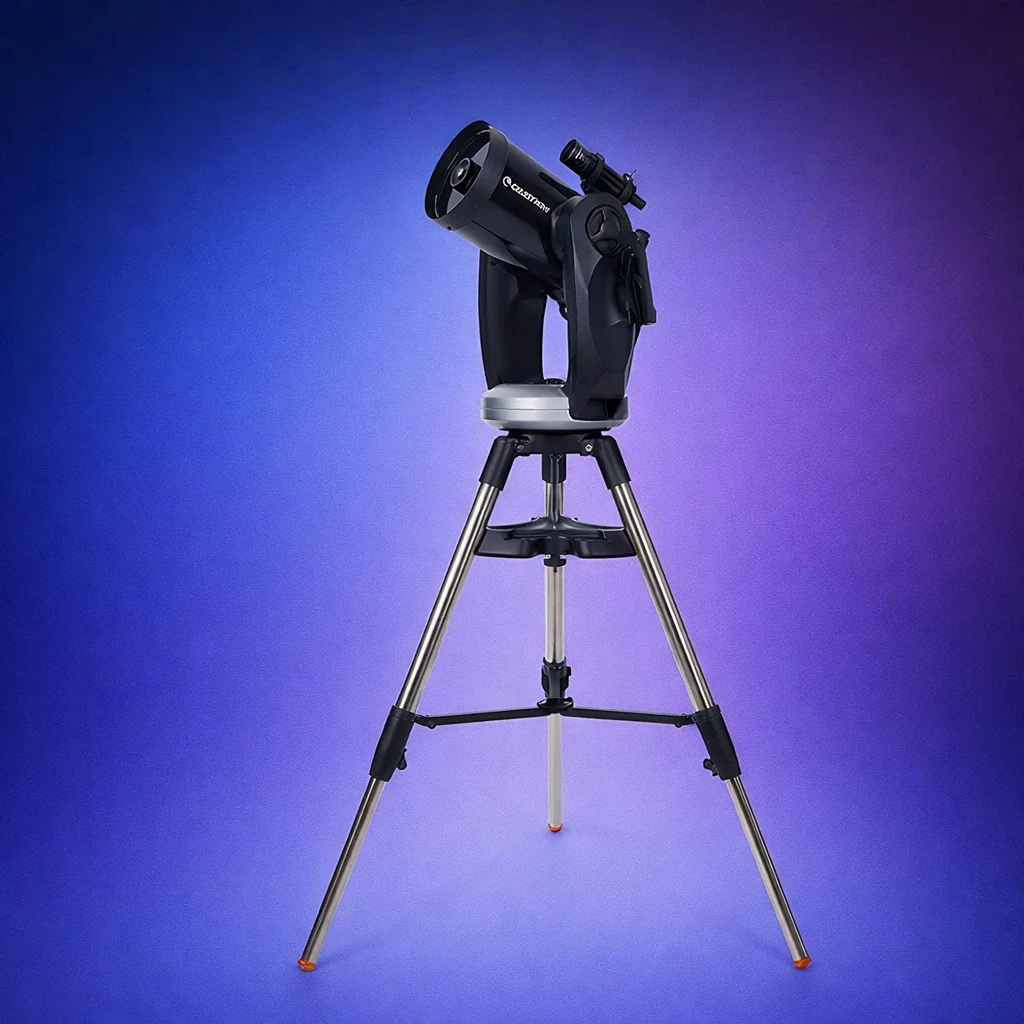
To set up the scope, you simply put the tube and fork combination on top of the tripod, and align it with a few stars that the computer system uses as reference points. The GPS in the mount saves you a few seconds by automatically updating the scope’s location as well as the date and time.
The CPC 800’s fork mount uses all-metal internal gears and tracks quite accurately. You should have no trouble centering targets every time, tracking for planetary astrophotography is good, and the mount has an autoguider port for deep-sky astrophotography too.
Accessories
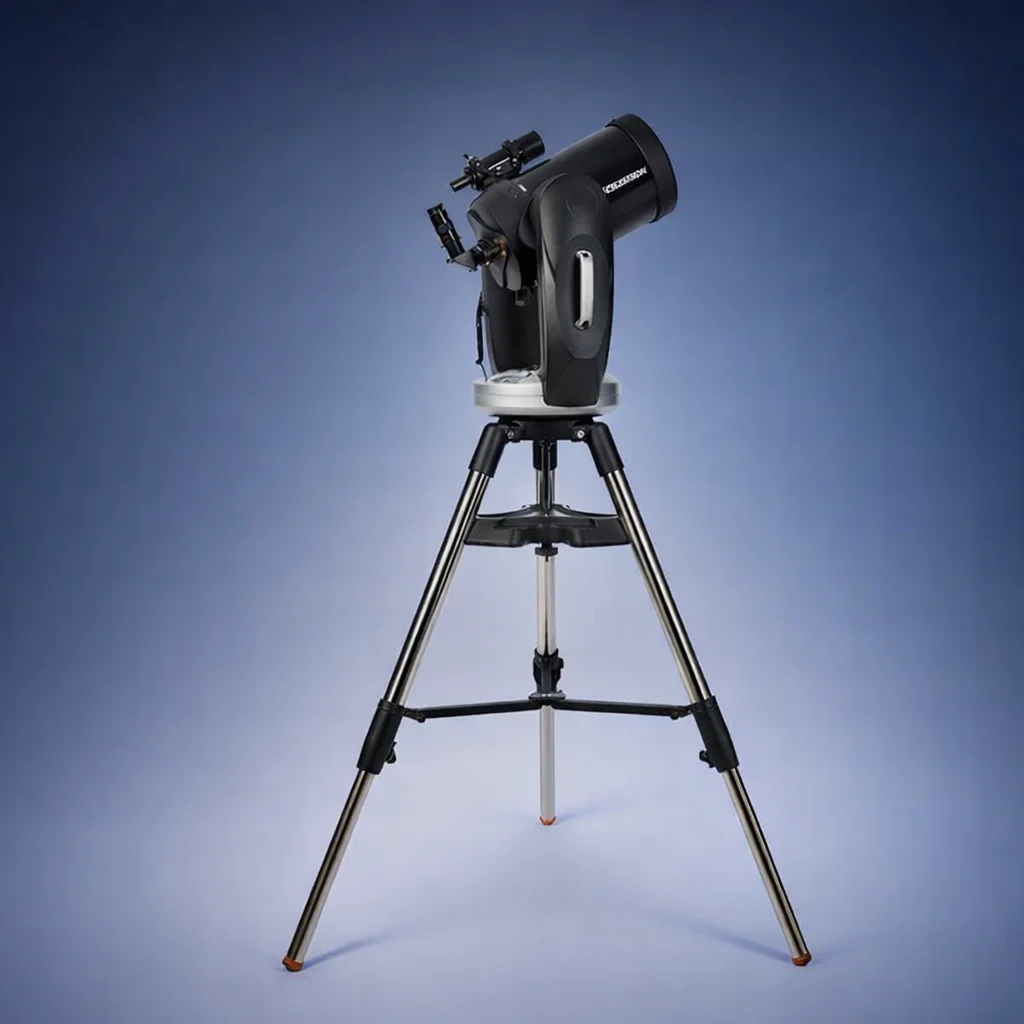
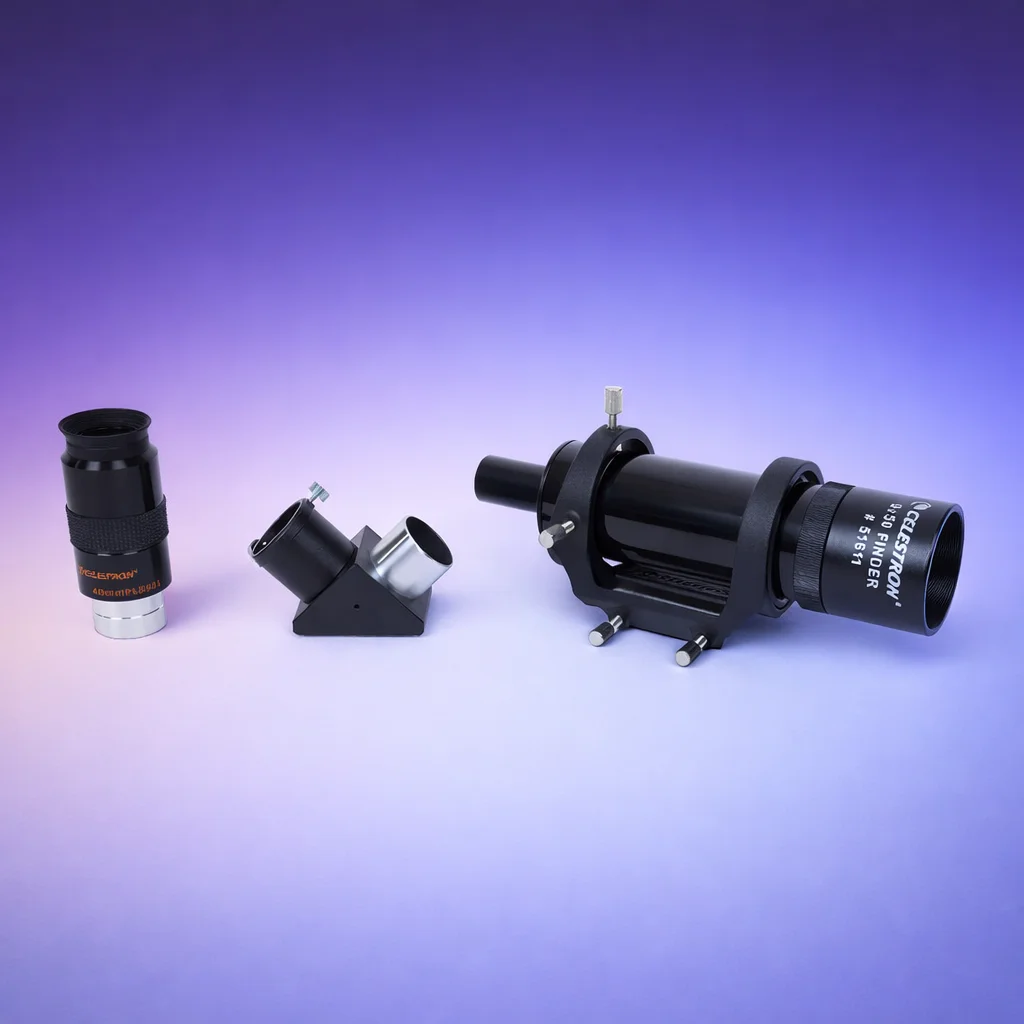
The CPC 800 GPS includes a basic but functional set of accessories. You get a 9x50 straight-through magnifying finder scope to aim at alignment stars, a 1.25-inch screw-on visual back, a 1.25-inch all-metal prism star diagonal, and a 1.25-inch 40mm E-Lux Plossl eyepiece.
That stock 40mm eyepiece provides 51x magnification with the CPC 800 and a true field of view around three-quarters of a degree across, or about 1.5 times the angular diameter of the full Moon. Additional eyepieces provide varying magnifications, and a 2-inch star diagonal with wider eyepieces or an f/6.3 reducer helps widen the field beyond the stock setup limits.
What can you see?
The CPC 800 is capable, as any good 8-inch telescope should be. You can see plenty of interesting Solar System and deep-sky objects.
Moon & Solar System Performance
| Object | What to Expect |
|---|---|
| Mercury & Venus | Mostly phases, though Mercury is easier to resolve than with smaller scopes. |
| Moon | Extremely bright and crisp views with details only a few miles across. |
| Mars | Polar ice caps and dust storms are obvious, with dark markings visible near favorable oppositions. |
| Jupiter | Colorful cloud belts, the Great Red Spot, and shadow transits of large moons are visible. |
| Saturn | Rings are clear at any magnification; Cassini Division and several moons appear at higher power. |
| Uranus | Resolvable as a disk, but moons are usually too faint. |
| Neptune | Difficult but detectable, with Triton visible under suitable conditions. |
| Pluto | Visible as a star-like point under dark skies if you can identify it confidently. |
Deep-sky performance depends heavily on light pollution. Under city skies you can still observe bright nebulae and clusters and resolve globular clusters. Under dark skies you can pick out dust lanes in bright galaxies and much more detail in objects like the Orion Nebula (M42).
Drawbacks
The CPC 800 is more expensive than the 8-inch NexStar Evolution, which can be controlled directly via smart devices while the CPC cannot out of the box. It is also heavy: the tripod weighs about 19 lb on its own, while the inseparable fork and optical tube assembly weighs about 42 lb.
This makes for a sturdy setup and easy two-part assembly, but you should be sure you can handle and store it. The wide footprint of the fork mount also makes storage awkward in tight spaces. If you can tolerate those issues, the CPC 800 rewards you with a very solid and capable instrument.
Conclusion
The Celestron CPC 800 GPS is not for everyone, but it is a versatile and well-made telescope with a wide range of capabilities. If you have the budget and storage space, it is an easy recommendation.