
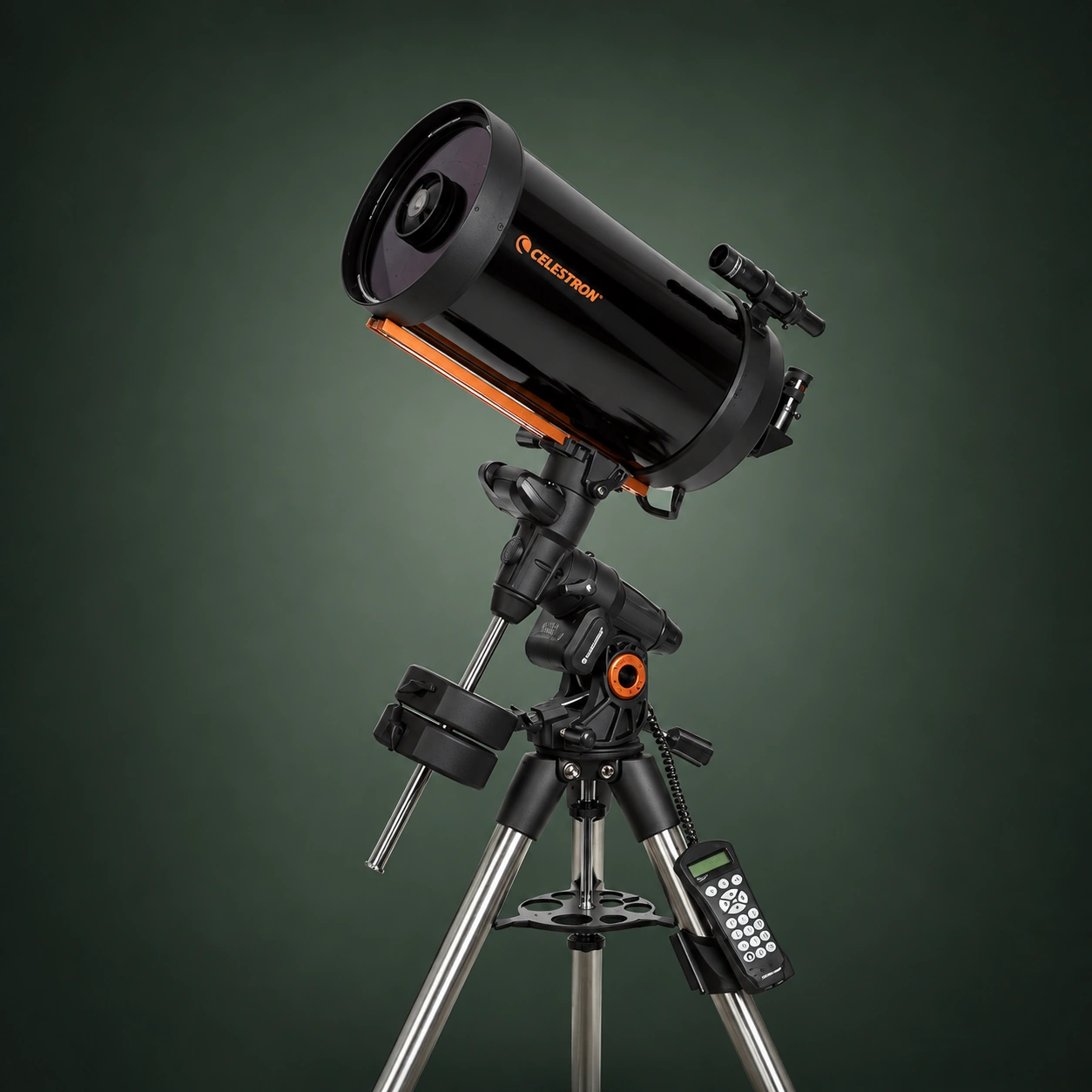
Celestron Advanced VX 9.25 is for the adept astronomer.
Pros
- Great for Close-Ups
- Large Aperture
- GoTo
- Mid-Level Astrophotography
Cons
- Not Beginner-Friendly
- Expensive
Available at These Vendors
Review
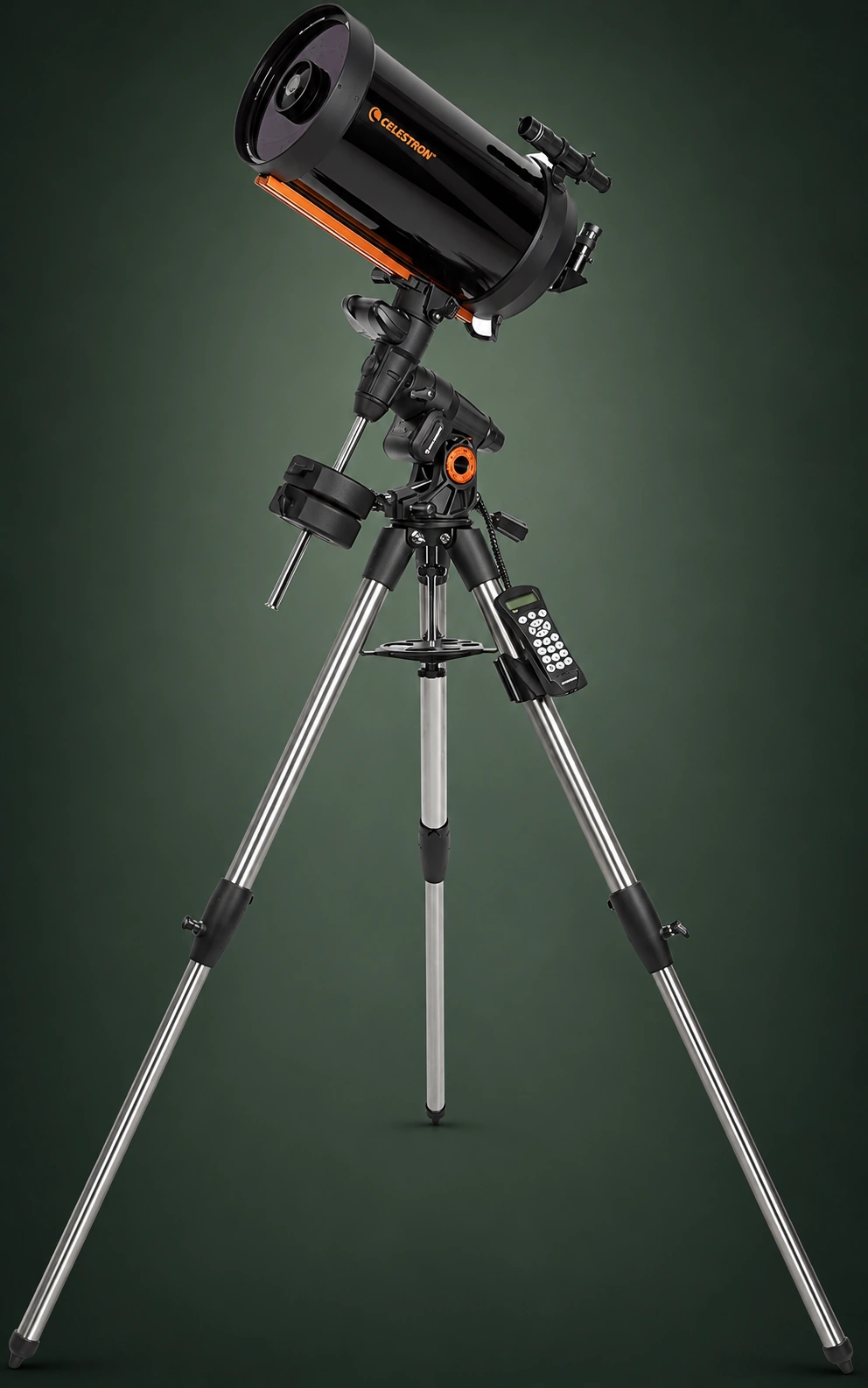
The Celestron Advanced VX 9.25 is a relatively high-end telescope package, featuring both a Celestron C9.25 optical tube and a Celestron AVX GoTo German equatorial mount.
This combination of large aperture and GoTo functionality allows for great views of both planets and deep sky objects alike, but sacrifices convenience and affordability in the process, making it an option primarily for those who have a large budget and do not mind a heavy telescope with a long setup time.
Advanced VX 9.25” is harder to use, but more powerful and capable.
Optics
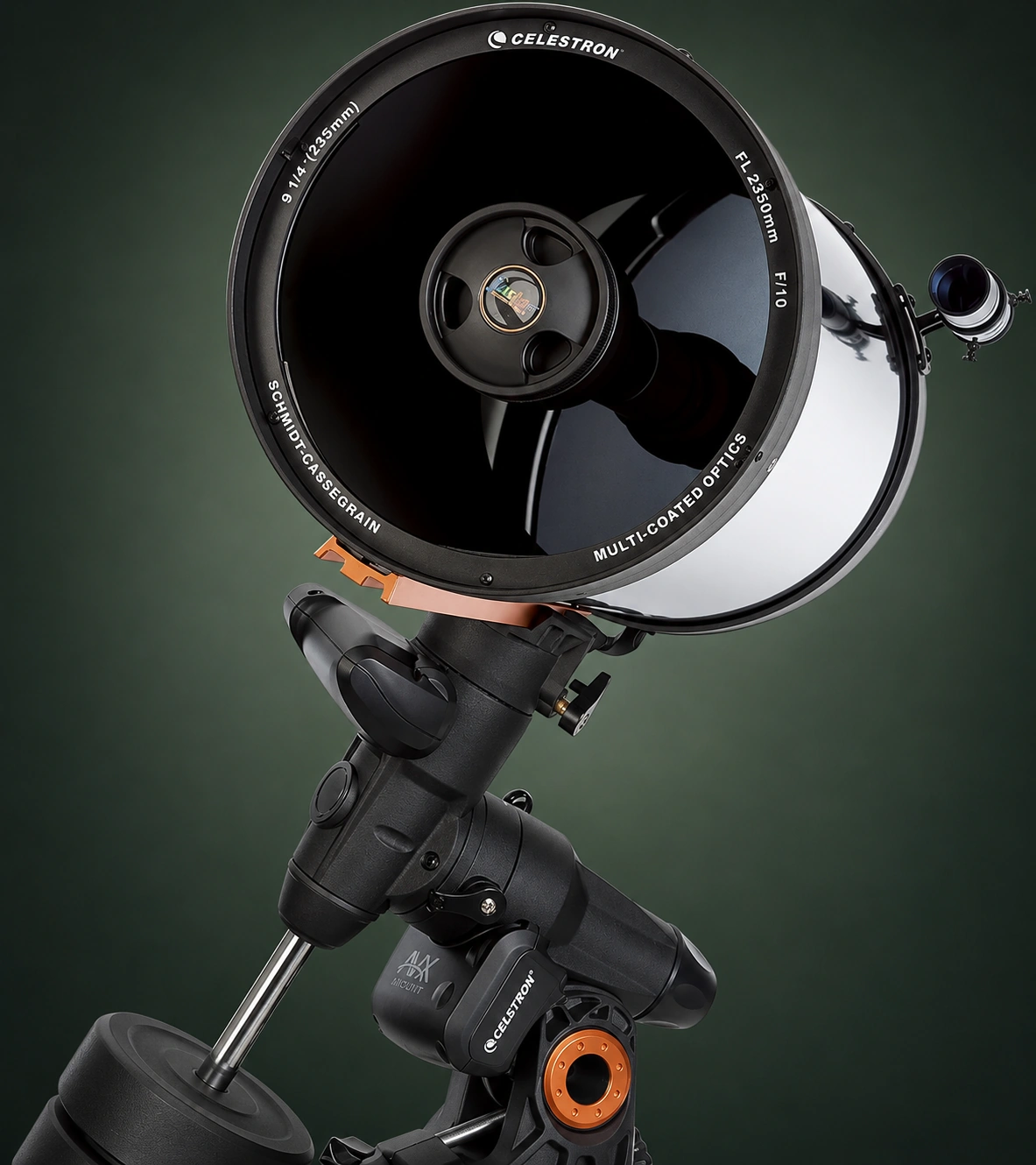
The C9.25 is one of Celestron’s better Schmidt-Cassegrain telescopes, providing better optical quality and aperture than its smaller siblings (Celestron C8, C5, etc.) thanks to a slightly different optical configuration.
Along with that, the 235mm of aperture makes this telescope a light bucket, giving distinct details to dimmer objects that would just appear as faint fuzzies in smaller scopes.
235mm of aperture makes this telescope a light bucket.
This wide aperture also allows for a maximum useful magnification of about 555x, giving you plenty of leeway for viewing planets and smaller DSOs up close.
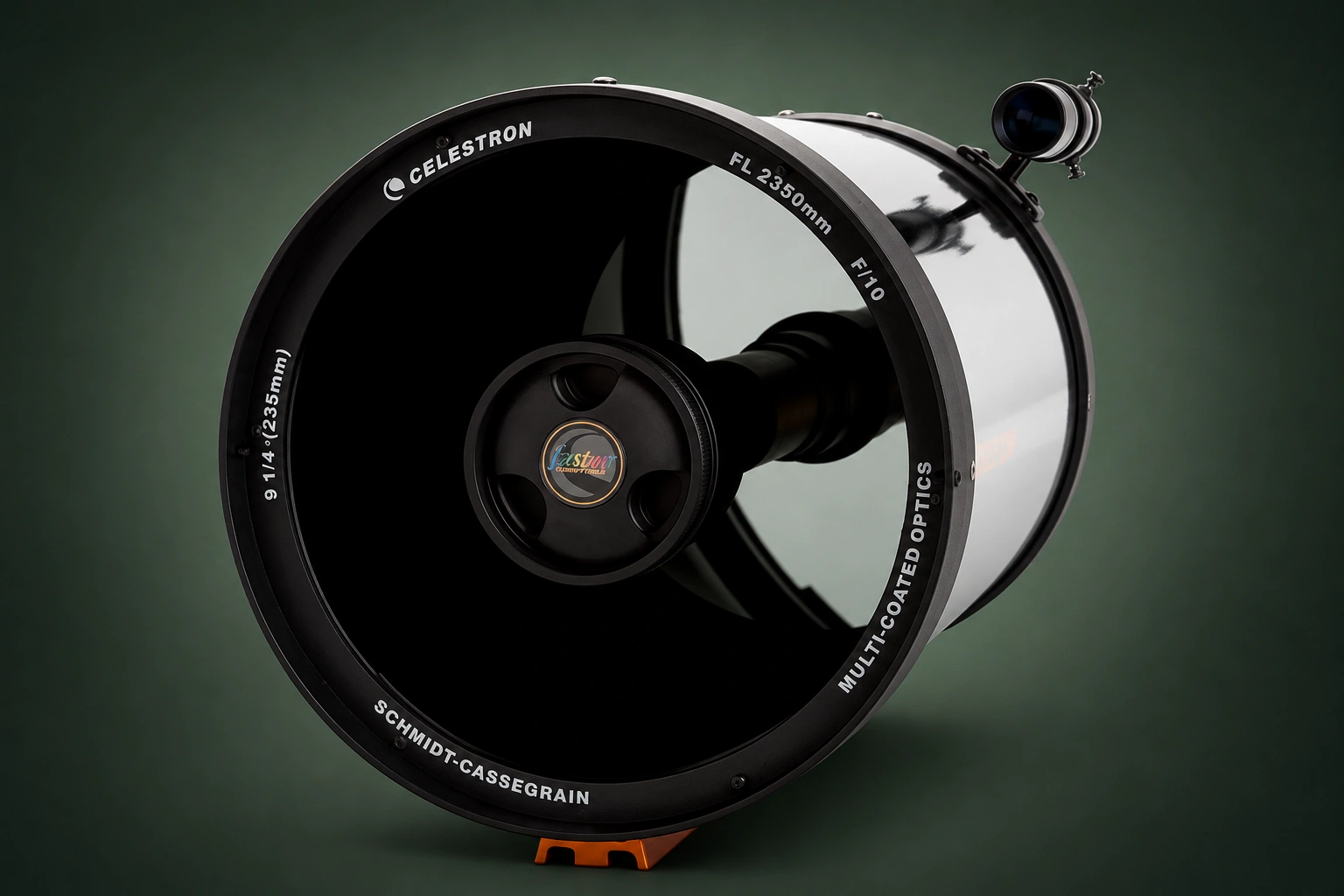
Fully accessorized, the tube weighs about 20lbs, which is fairly easy for an average adult to carry around, albeit a bit uncomfortable when attempting to attach it to the saddle of the mount. Most of this weight is primarily the optics, since the body is made almost fully out of aluminum. Despite its decent weight, the largest dimension of the telescope is a mere 22 inches in length.
C9.25’s small footprint(22”) allows for convenient transport.
This is, of course, because of its Schmidt-Cassegrain optical design. The C9.25’s small footprint allows for convenient transport and the ability to fit in a very large padded case.
The optical tube is phenomenal, both in optical power and convenience.
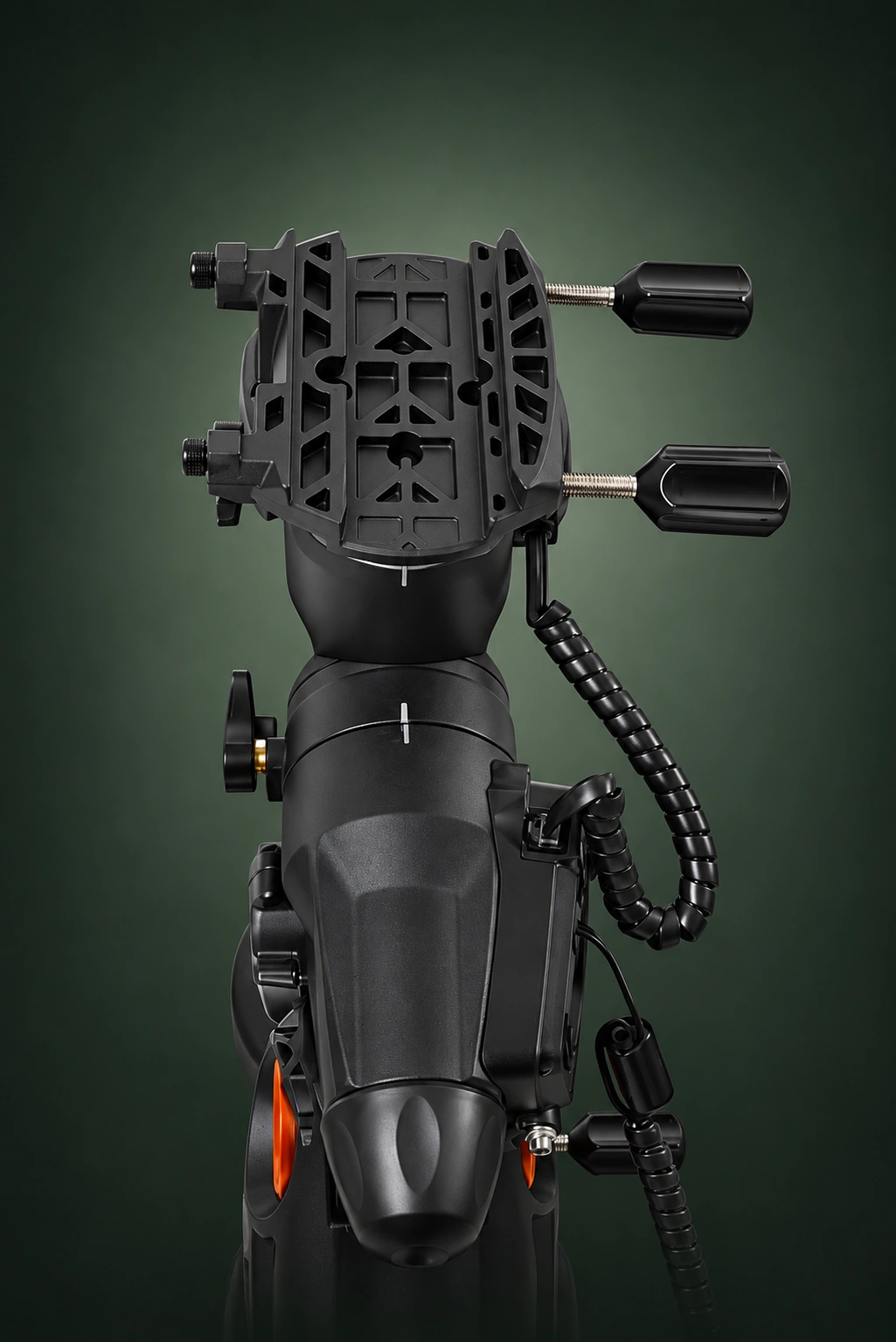
The C9.25 also features a Vixen-style dovetail bar, which can be mounted on a wide variety of mounts, including almost all Celestron mounts. Overall, the optical tube allows for a lot of flexibility in mounting options, transport, and observing.
What can you see inside The Solar System?
The wide aperture and long focal length of the C9.25 allows for much flexibility in observing. With higher power eyepieces and/or a barlow lens, this telescope is very capable in displaying solar system objects with exquisite detail.
- Mercury
- Phases.
- Venus
- Phases.
- The Moon
- A very high amount of detail, making visible features that are only a few miles across.
- Mars
- Polar ice caps are very visible, and surface details are distinguishable, assuming it is the right time of year.
- Jupiter
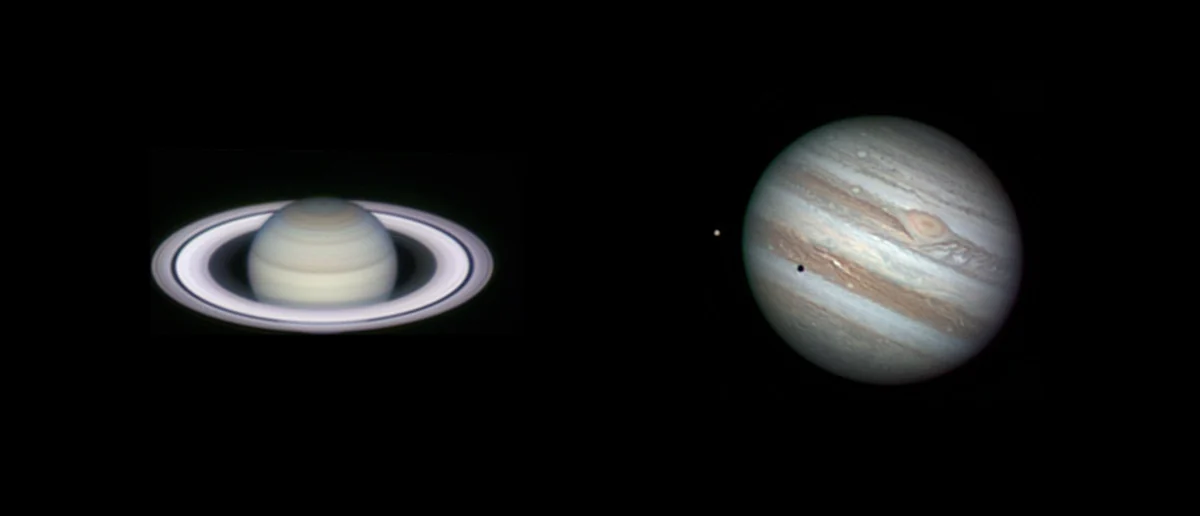
- The cloud bands, Great Red Spot, and 4 Galilean moons are effortlessly visible. The transits of the moons can also be seen as shadows on the surface!
- Saturn
- Cassini Division is easily visible, as well as the Encke Division on a night of spectacular seeing. Some of Saturn’s moons are also visible, as well as detail in the clouds.
- Uranus
- A small turquoise dot.
- Neptune
- A near-stellar blue dot.
What can you see outside The Solar System?
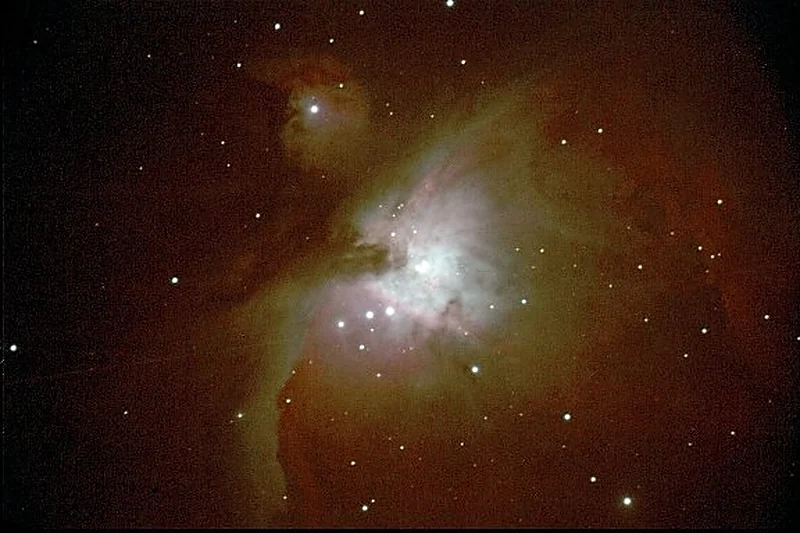
The AVX 9.25 is also a spectacular scope for deep sky viewing, given its combination of large aperture and 40,000+ object GoTo database When taken to a dark site on a moonless night, this telescope will easily perform, with a multitude of galaxies, nebulae, and other objects in your eyepiece within minutes. The 235mm of aperture makes viewing globular clusters much more exciting than with smaller scopes, and also displays the more faint, intricate features of galaxies and nebulae.
Astrophotography
Given that the C9.25 has a super-long focal length of 2350mm and is close to exceeding the Advanced VX’s payload capacity, we wouldn’t recommend trying deep-sky astrophotography with it. Even with an f/6.3 focal reducer, a 1480mm focal length is still a lot for the Advanced VX to accurately track with.
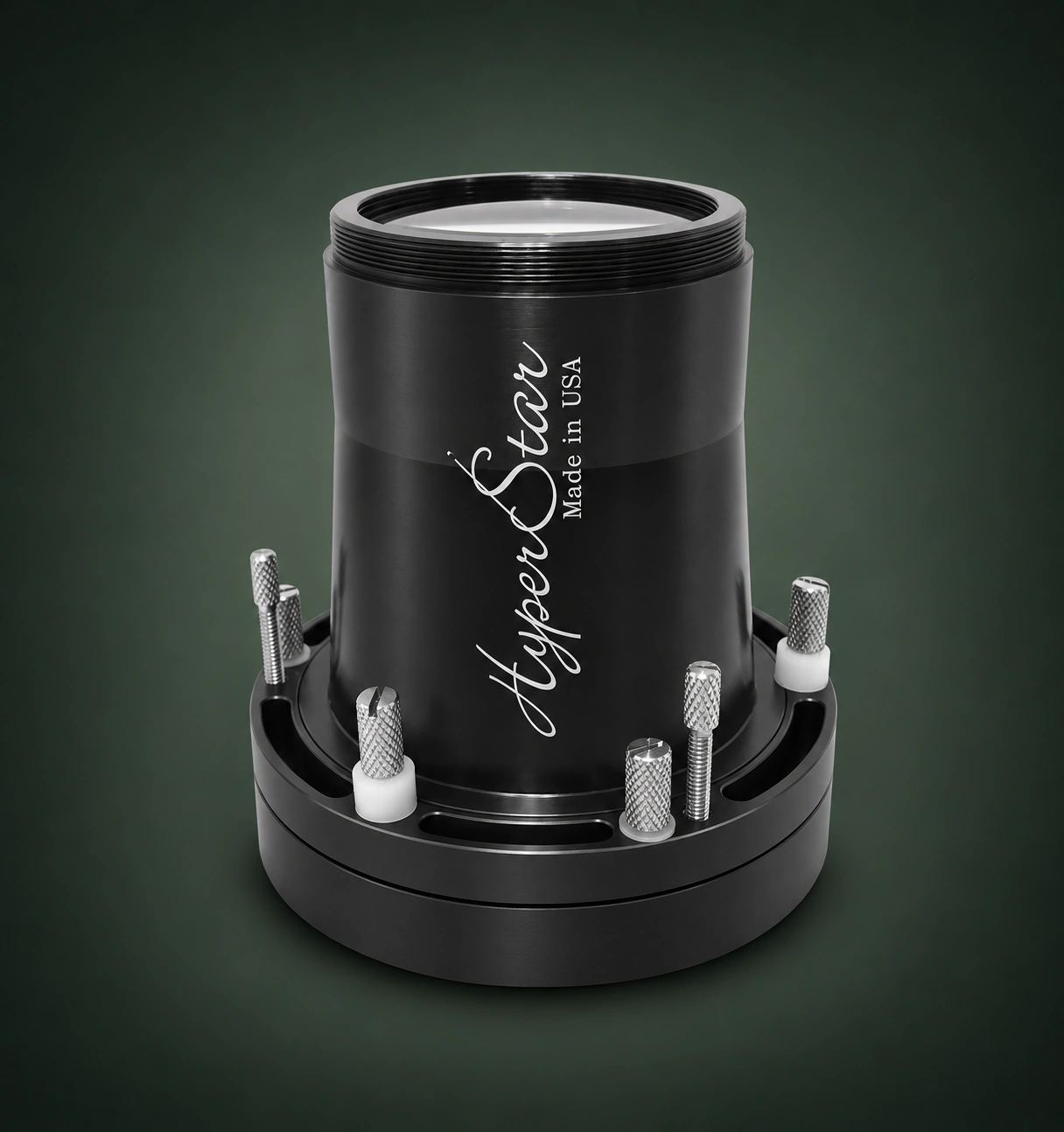
A HyperStar reduces the scope to f/2 and should work okay, but is rather expensive and not easy for beginners to use. The best option for using the C9.25 Advanced VX for deep-sky astrophotography would be to get a smaller refractor or Newtonian and use that for astrophotography on the Advanced VX instead.
The C9.25 is great for lunar and planetary astrophotography, however. With a good planetary camera and Barlow lens, you can shoot images that make even the pros jealous.
Mount
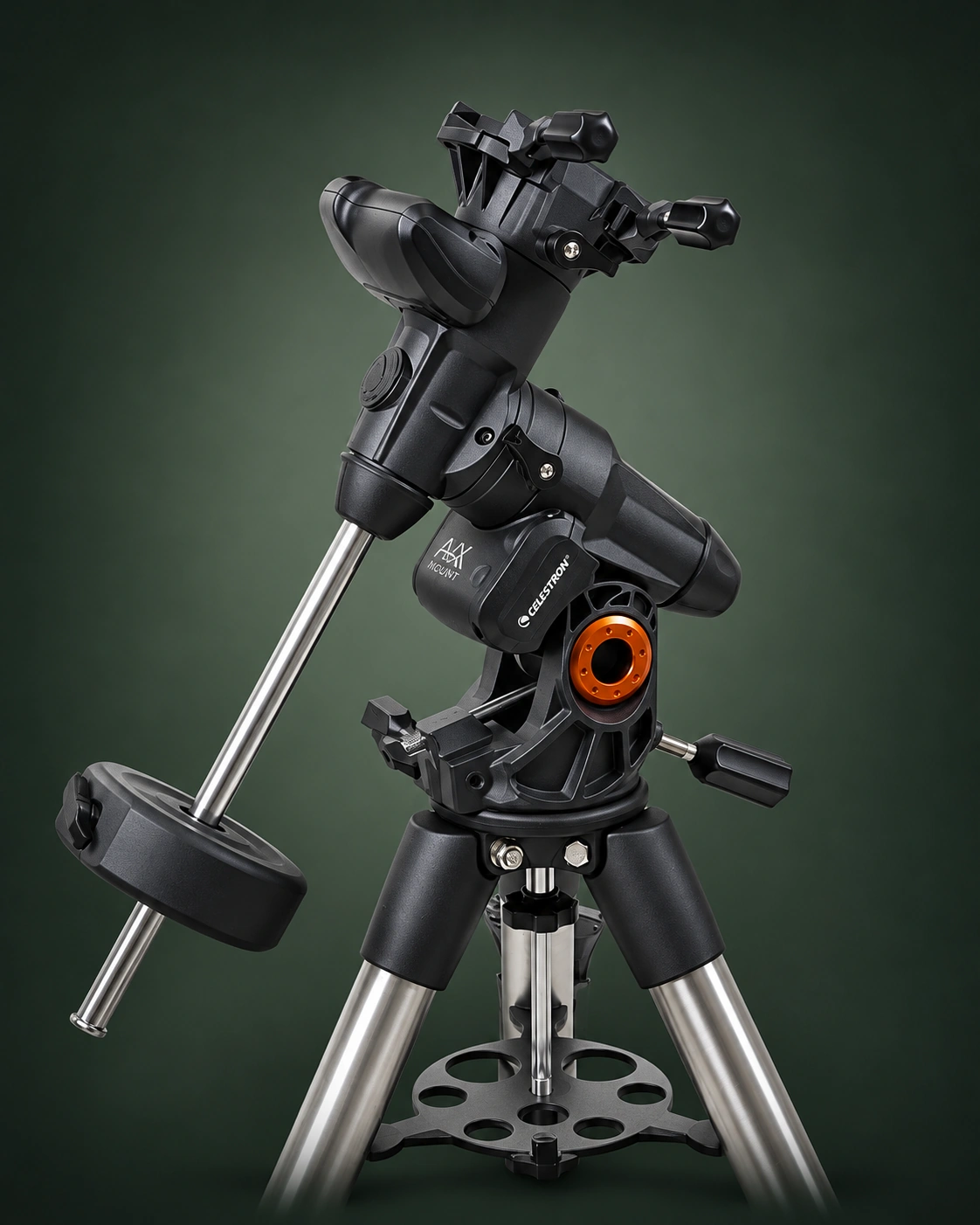
The Advanced VX is Celestron’s mid-tier equatorial mount, featuring a 30 pound capacity, 40,000+ object GoTo database, and ports for computer control and autoguiding.
Advanced VX is Celestron’s mid-tier equatorial mount.
This style of mount can pose a challenge for beginning astronomers, but is very useful for more adept astronomers.
The AVX opens up many possibilities, including the ability to do long-exposure images for deep sky astrophotography, as well as ensuring accurate tracking throughout the whole night.
This mount is packed full of features, but they primarily benefit astrophotographers rather than visual astronomers (minus the GoTo). The maneuverability and convenience of an alt-az mount would be more suitable for visual astronomers.
Along with that, the mount and tripod weigh 35lbs together, which can be uncomfortable to lug around. However, carried in separate pieces, the portability isn’t awful. The mount head can also fit in a large padded case.
Accessories
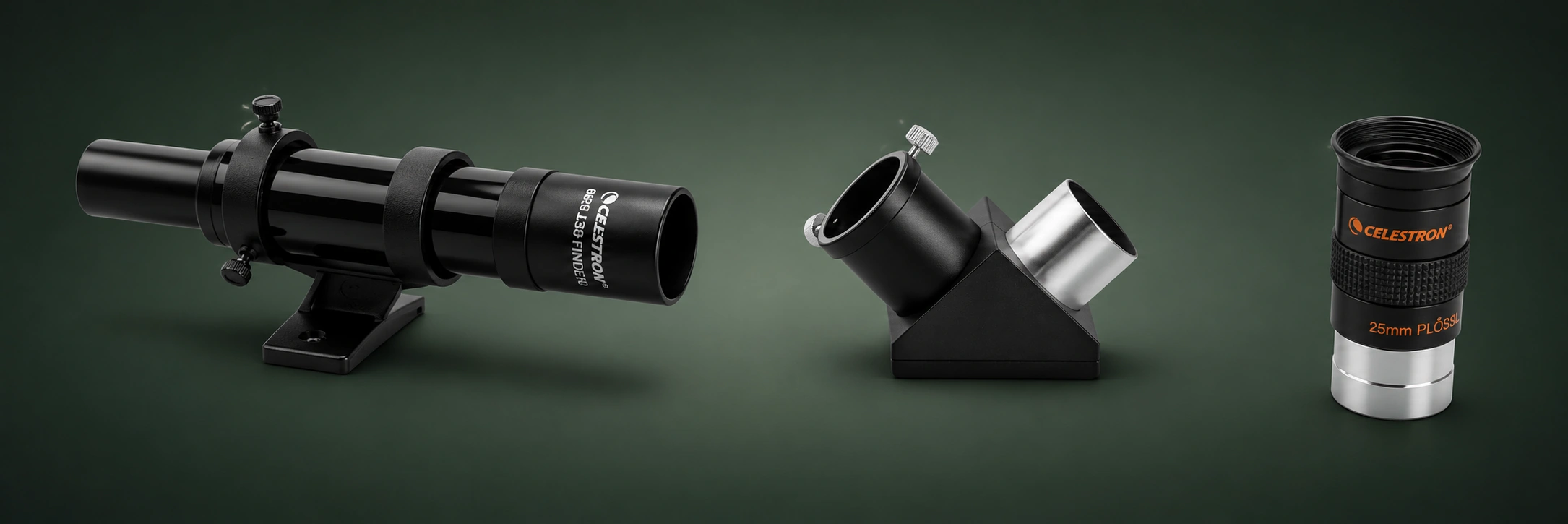
The Celestron AVX 9.25 comes with a single 25mm Plossl eyepiece, along with a 1.25” prism star diagonal.
The included eyepiece and diagonal are decent starter accessories, but you may want more eyepieces in the future for a wider range of magnifications.
25mm eyepiece does not even begin to test the limits of the C9.25’s abilities.
At only 94x magnification, the 25mm eyepiece does not even begin to test the limits of the C9.25’s abilities.
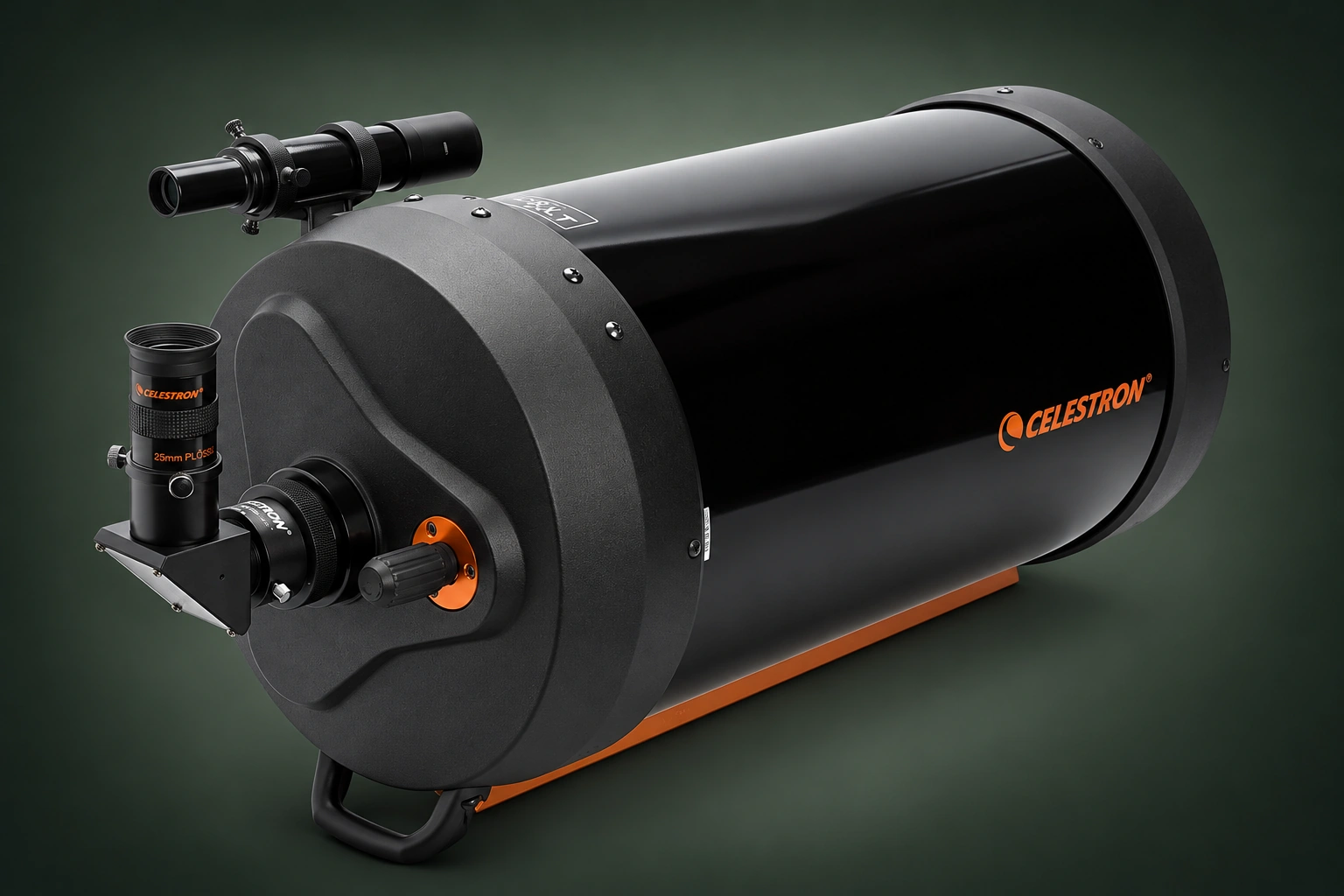
The optical tube also comes accessorized with a 6x30 finderscope. This magnified finderscope aids in star hopping to objects that cannot be easily seen with the naked eye, but is not necessary with the AVX’s GoTo functionality. A zero-power sight would be better suited for the AVX 9.25 package due to this.
Drawbacks
As mentioned in the cons list, this telescope package is quite expensive, retailing at about $2,250 USD. Other telescopes like Dobsonians can give you an even larger aperture for a cheaper price, which makes this telescope a bit of a waste for visual astronomers.
Along with that, the AVX 9.25 is not very beginner-friendly. The need for balancing, polar alignment, and star alignment of the Celestron AVX may intimidate beginners and drive them away.
Conclusion
The Celestron AVX 9.25, although expensive, provides delightfully sharp views of deep-sky objects and planets. We recommend this for adept astronomers or those who want to dive into planetary/solar system astrophotography.